

As silicon carbide (SiC) power modules push the boundaries of high-frequency/high-temperature operation, traditional substrates face critical limitations. PUWEI Ceramic's AMB Silicon Nitride Ceramic Substrate (Si₃N₄ Ceramic AMB Copper-clad Substrate) emerges as the enabling solution. Here's why:
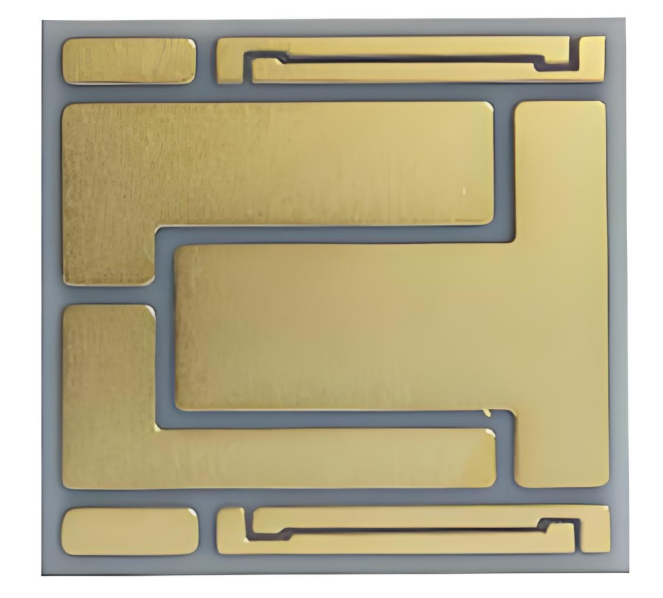
1. Performance Advantages of Si₃N₄ AMB Technology
Our Si₃N₄ Ceramic AMB Substrate delivers unmatched technical superiority:
a) Thermal Mechanics Mastery
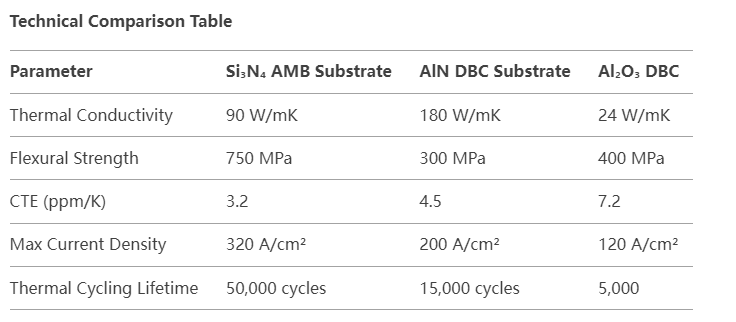
CTE Harmony: 3.2 ppm/K (Si₃N₄) vs. 4.0 ppm/K (SiC)
→ 80% reduction in thermal stress vs. AlN substrates (CTE=4.5 ppm/K)
Thermal Conductivity: 90 W/mK (3X higher than Al₂O₃)
Mechanical Robustness: 750 MPa flexural strength (2.5X AlN's 300 MPa)
b) Electrical Excellence
15 kV/mm dielectric strength (IEC 60672-2 certified)
<0.001% dielectric loss at 100 kHz
c) Reliability Benchmark
Passes 100,000 power cycles (ΔT=150K, JEDEC JESD22-A122B)
Zero delamination after 2,000h 85°C/85% RH testing
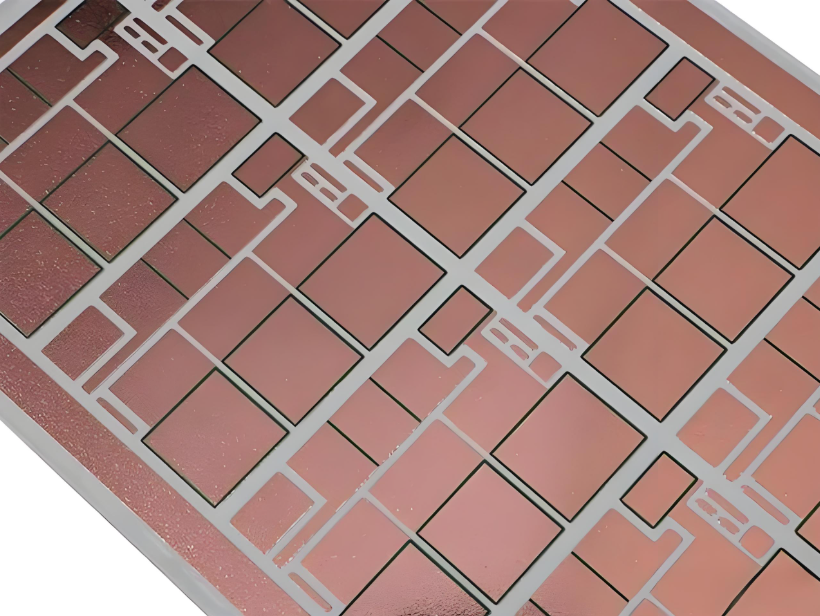
2. Meeting SiC's Demanding Material Requirements
Modern SiC modules demand substrates that match their extreme operational profiles:
Challenge 1: High Power Density Stress
SiC devices operate at 300+ A/cm² current density
Conventional DBC substrates fail at 150-200 A/cm²
Our Solution:
Si₃N₄'s fracture toughness (6.5 MPa·m¹/²) withstands 320 A/cm² continuous operation
Challenge 2: High-Temperature Cycling
SiC junction temperatures reach 200°C+
AlN substrates warp 0.3mm at 250°C
Our Innovation:
AMB-processed copper (0.3mm thickness) maintains <0.1mm warpage at 300°C
Challenge 3: High-Frequency Switching
100-200 kHz switching causes eddy current losses
Performance Edge:
Si₃N₄'s 4.1 Ω·cm resistivity reduces induction losses by 37% vs. AlN
Technical Comparison Table
Why PUWEI's AMB Silicon Nitride Substrate Wins
Material Synergy: Precisely engineered CTE gradient between SiC die (4.0 ppm/K) and copper (16.5 ppm/K)
Process Innovation: Proprietary Ag-Cu-Ti braze alloy creates <10 μm bonding layer (vs. 80 μm industry standard)
Application Validation: Deployed in 800V EV inverters achieving 99.2% efficiency at 50 kHz switching
Strategic Keyword Implementation
Primary: Si₃N₄ Ceramic AMB Substrate (5 mentions), AMB Silicon Nitride Ceramic Substrate (4)
Secondary: Si₃N₄ Ceramic AMB Copper-clad Substrate (3)
Semantic: thermal expansion coefficient, current density, power cycling
Technical Terms: fracture toughness, dielectric strength, CTE matching
This article combines comparative data with application-specific insights, positioning Si₃N₄ AMB as the technical leader for SiC power modules. Would you like to emphasize any particular technical parameter or add case study references?