

Alumina Ceramics: Classification and Applications
Alumina ceramics represent a fundamental category in advanced ceramic materials, with properties and applications varying significantly based on aluminum oxide (Al₂O₃) content. Understanding these classifications helps engineers select the optimal material for specific industrial requirements.
Alumina Ceramic Classification System
The performance characteristics of Al2O3 ceramic substrates are directly influenced by their purity levels, with common classifications including:
99% Alumina (High-Purity Grade)
- Primary applications: High-temperature crucibles, refractory furnace tubes
- Specialized uses: Ceramic bearings, seals, and valve plates
- Key advantage: Maximum thermal and chemical resistance
95% Alumina (Industrial Grade)
- Common applications: Corrosion-resistant and wear-resistant components
- Performance: Enhanced mechanical properties and durability
- Cost-effectiveness: Balanced performance for industrial applications
85% Alumina (Electronics Grade)
- Special feature: Often modified with talc for improved performance
- Compatibility: Works well with molybdenum, niobium, and tantalum
- Primary use: Electronic vacuum devices and specialized components
75%-95% Alumina (General Purpose)
- Wide application: Thick film ceramic substrates for electronic circuits
- Appearance: Typically white ceramic substrates
- Common uses: LED modules, high-frequency circuit boards
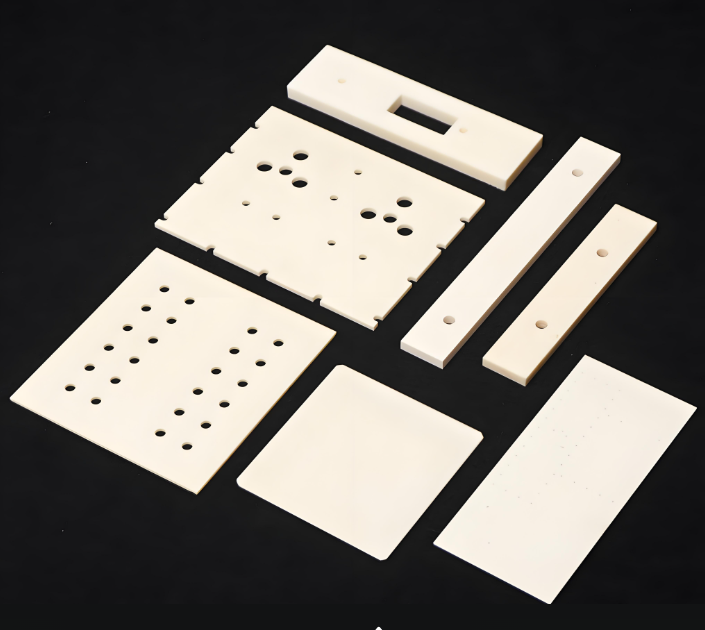
Key Advantages of Alumina Ceramic Substrates
- Excellent electrical insulation performance
- Outstanding high-temperature resistance
- High mechanical strength and hardness
- Superior chemical stability
- Good machinability for custom applications
Latest Industry Technology Trends
Advanced Manufacturing Techniques
Recent developments in precision manufacturing enable more complex Alumina Ceramic Structural Components with tighter tolerances and improved surface finishes.
Enhanced Thermal Management
The growing demand for higher power densities drives innovation in high thermal conductivity ceramic substrates for advanced electronic packaging.
Critical Application Areas
Electronics and Semiconductor
- Power semiconductor ceramic substrates for IGBT modules
- LED ceramic substrates for high-power lighting systems
- Microwave射频 ceramic substrates for communication devices
- Thermoelectric Modules Ceramic Substrate applications
Industrial and Automotive
- Automotive electronic ceramic substrates for sensors and control units
- Wear-resistant components for industrial machinery
- Thermal management systems
- Chemical processing equipment
Selection Guidelines
- Identify Operating Conditions: Temperature, chemical exposure, mechanical stress
- Determine Electrical Requirements: Insulation needs, frequency considerations
- Evaluate Mechanical Demands: Strength, hardness, wear resistance
- Consider Manufacturing Constraints: Complexity, tolerances, surface finish
- Balance Performance and Cost: Select optimal purity level for application
Frequently Asked Questions
What is the difference between thick and thin film ceramic substrates?
Thick film circuits typically use 75%-95% alumina, while thin film circuits require higher purity (97%-99%) for better precision and performance.
How does alumina purity affect thermal performance?
Higher purity generally improves thermal conductivity and temperature resistance, making 96 Alumina Ceramic Substrate products ideal for demanding thermal applications.
Can alumina ceramics be machined to custom shapes?
Yes, materials like Alumina Ceramic Disc and other Alumina Ceramics can be precision-machined for specific application requirements.
What applications are suitable for 96% alumina substrates?
96 Alumina Ceramic Substrate products offer excellent balance of performance and cost, ideal for Ceramic Insulating Substrates For TEC and general electronic applications.
Puwei Expertise in Alumina Ceramics
Shaanxi Puwei Electronic Technology specializes in developing high-quality alumina ceramic substrates for diverse industrial and electronic applications. Our expertise spans multiple purity grades, ensuring optimal solutions for specific customer requirements.
Explore our ceramic solutions: 96 Alumina Ceramic Substrate, 99.6 Alumina Ceramic Substrate, Thermoelectric Cooling Modules Ceramic, and other advanced Alumina Ceramic Structural Components.