

Electrostatic chucks (ESCs) are essential components in modern semiconductor manufacturing, designed for precise and stable wafer handling under vacuum and plasma conditions. These devices utilize electrostatic attraction to securely hold thin wafers in place, ensuring flat and uniform contact during high-precision processes.
Shaanxi Puwei Electronic Technology Co., Ltd. specializes in developing ESCs tailored for use in critical semiconductor equipment, including PVD systems, CVD systems, etchers, and ion implantation tools. As a key wafer-support component, ESCs play a vital role in maintaining process integrity and minimizing contamination.
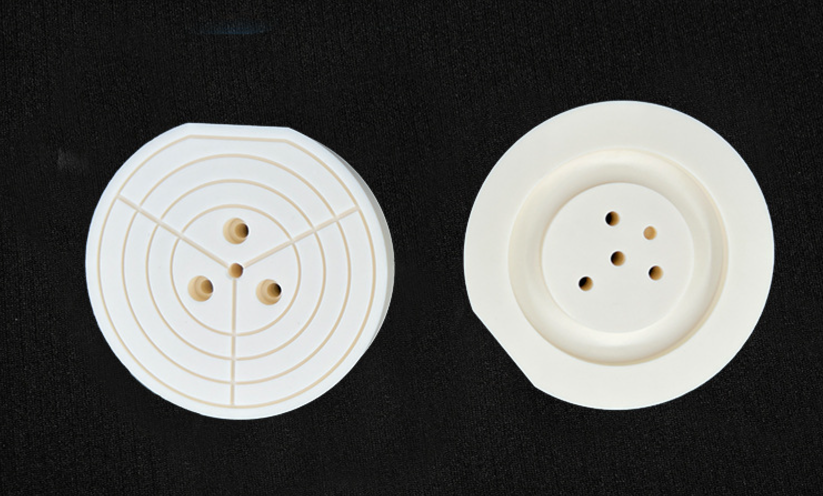
Based on material composition, Puwei’s ESCs are classified into two main types:
Alumina (Al₂O₃) Ceramic ESCs – The most commonly used type, offering excellent electrical insulation, high hardness, and superior wear resistance. Compared to PU-based materials, alumina resists particle shedding and ensures high durability in halogen plasma environments.
Aluminum Nitride (AlN) Ceramic ESCs – Typically used in heated ESC applications, AlN combines high thermal conductivity with strong electrical insulation performance.
Ceramic materials offer inherent advantages over metals, including better thermal stability and insulation. Puwei’s high-purity alumina ESCs are engineered to reduce metal ion contamination and maintain mechanical stability across large wafer formats.
To enhance reliability and longevity, Puwei applies a plasma nano-spray coating process, forming a dense, durable insulating layer on the chuck surface. This method offers cost advantages over co-fired ceramics and outperforms thin-film types in durability and wear resistance.
More customized services:Alumina Ceramics/Aluminum Nitride Ceramics/Electronic Ceramic Products