

Puwei Alumina Ceramic Substrates: High-Performance Solutions for Thermal and Electronic Applications
In today's demanding electronic environments, effective thermal management and reliable electrical performance are critical. Puwei's 96% Alumina Ceramic Substrates provide engineered solutions that meet these challenges across diverse industries from automotive to telecommunications. As electronic systems continue to shrink while power densities increase, the selection of substrate materials becomes paramount for long-term reliability and performance.
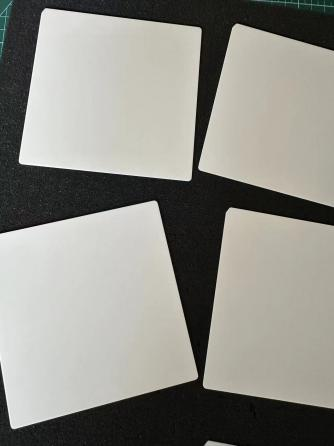
Technical Advantages of Puwei Alumina Ceramic Substrates
Puwei's Al2O3 ceramic substrates deliver exceptional performance through their unique combination of material properties that address the most demanding requirements in semiconductor, power electronics, and RF/microwave applications:
- Superior Thermal Management: Excellent thermal conductivity ensures efficient heat dissipation in high-power applications, preventing hot spots and premature failure.
- Excellent Electrical Insulation: With high dielectric strength and volume resistivity, these substrates provide the excellent electrical insulation required for high-voltage power modules and sensitive RF circuits.
- High Mechanical Strength: Superior flexural strength combined with high mechanical strength ensures structural integrity under thermal cycling and mechanical stress.
- Precision Dimensional Control: High surface flatness and tight thickness tolerances support fine-line circuitry and automated assembly processes.
- Wear and Corrosion Resistance: The inherent high hardness and chemical inertness of alumina ensure long-term reliability in harsh environments.
- High Temperature Stability: High temperature resistant ceramic substrates maintain mechanical and electrical properties continuously at elevated temperatures.
Latest Industry Technology Trends Driving Ceramic Substrate Innovation
Advanced Thermal Interface Materials for Power Density
The push for higher power densities in compact EV powertrains and industrial drives drives innovation in high thermal conductivity ceramic substrates. Puwei's alumina materials, combined with advanced metallization techniques, enable better heat spreading and reduced junction temperatures in next-generation power modules.
5G and High-Frequency Requirements
With the global expansion of 5G infrastructure, microwave RF ceramic substrates require precise dielectric constants and low loss tangents. Puwei's alumina ceramic substrates consistently deliver these critical RF properties across frequency ranges up to 40 GHz.
Miniaturization and Integration Trends
The demand for smaller, more integrated electronic packages drives requirements for ceramic circuit boards with finer line/space capabilities and embedded passive components. Puwei's precision substrates support conductor line widths down to 50µm for thick film ceramic substrates and advanced DPC processes.
Critical Application Sectors for Alumina Ceramic Substrates
Automotive Power Electronics
- EV traction inverters and DC-DC converters requiring power device ceramic substrates with exceptional thermal cycling reliability
- Battery management systems with high-voltage isolation requirements
- Engine control modules and transmission sensors exposed to extreme temperatures and vibration
- Advanced driver assistance systems (ADAS) requiring stable RF performance for radar modules
Power Semiconductor Packaging
- IGBT modules for industrial motor drives and renewable energy inverters
- High-power LED ceramic substrates for automotive lighting and general illumination
- RF power amplifiers for broadcast and telecommunications infrastructure
- Thermoelectric Modules Ceramic Substrate bases for precision temperature control in medical and industrial applications
Industrial and Communication Systems
- Base station power amplifiers requiring excellent thermal management
- Industrial laser diode packages with high heat flux requirements
- Medical imaging equipment (X-ray, CT) demanding radiation resistance and stability
- Printing and imaging systems requiring precision flatness and wear resistance
Technical Specifications and Manufacturing Capabilities
Puwei offers comprehensive manufacturing services to meet specific application requirements with precision and consistency:
Material Grades Available
- 96% Alumina: Optimal balance of performance and cost for most power and RF applications
- 99% Alumina: Enhanced mechanical strength and dielectric properties for demanding applications
- 99.7% Alumina: Maximum purity for critical thin-film circuits and high-reliability applications
Precision Manufacturing Capabilities
- Thickness Range: 0.2 mm to 3.0 mm with tight tolerance capability
- Maximum Dimensions: 420mm × 240mm for large-format array processing
- Minimum Hole Diameter: Ø0.08 mm via laser drilling with high positional accuracy
- Processing Methods: Laser scribing, mold pressing, CNC grinding, and ultrasonic machining
- Surface Finish: As-fired, lapped, or polished for thin-film applications
Customization Process: From Concept to Production
- Requirements Analysis: Technical consultation with our engineering team to define application needs, operating conditions, and performance targets for your custom ceramic substrates project.
- Material Selection: Choosing the optimal alumina grade based on thermal, electrical, and mechanical requirements, with consideration of metallization compatibility.
- Design for Manufacturability: Our engineers review your layout and provide feedback to optimize feature placement, tolerances, and panel utilization for cost-effective production.
- Prototype Development: Sample production with comprehensive testing including dimensional verification, thermal performance validation, and electrical property measurement.
- Volume Manufacturing: Scalable production with statistical process control, 100% critical dimension inspection, and traceability throughout manufacturing.
Quality Assurance and Reliability Testing
Every Alumina Ceramics substrate shipped from Puwei undergoes rigorous quality control to ensure consistent performance:
- Dimensional Inspection: Automated optical inspection for critical features and hole patterns
- Thermal Performance Testing: Thermal conductivity verification on representative samples
- Electrical Property Validation: Dielectric strength and insulation resistance testing
- Mechanical Reliability: Flexural strength and thermal shock resistance verification
- Surface Quality Assessment: Flatness, camber, and surface finish measurement
Frequently Asked Questions from Technical Buyers
What distinguishes 96% alumina from higher purity grades for my application?
A: 96% alumina offers the optimal balance of performance and cost-effectiveness for most applications, providing excellent thermal and electrical properties while being more economical than 99%+ grades. Choose 99%+ purity when requiring maximum corrosion resistance, lowest dielectric loss at high frequencies, or compatibility with specific thin-film metallization processes.
Can Puwei supply substrates for thermoelectric cooling applications?
A: Yes, we specialize in Ceramic Insulating Substrates For TEC and Thermoelectric Cooling Modules Ceramic applications, providing substrates with optimized flatness, thermal conductivity, and metallization adhesion for reliable thermal cycling performance in TEC assemblies.
What quality control measures ensure substrate reliability?
A: We employ comprehensive testing including automated dimensional verification, thermal performance validation, and electrical property measurement. Each Alumina Ceramic Structural Component lot includes sample testing for flexural strength, dielectric strength, and thermal shock resistance to ensure compliance with specifications.
Do you support custom shapes and complex hole patterns?
A: Absolutely. Our advanced laser processing enables complex geometries, slots, cavities, and precision holes as small as Ø0.08mm for specialized Alumina Ceramic Disc and substrate requirements. We routinely produce custom patterns for ceramic circuit boards applications requiring non-standard formats.
How do Puwei substrates perform in high-humidity environments?
A: Alumina's inherent wear resistance and high temperature resistance includes exceptional resistance to moisture absorption (0% porosity in fully dense substrates). This ensures stable insulation resistance and prevents electrochemical migration in humid operating conditions, making Puwei substrates ideal for automotive under-hood and outdoor telecommunications applications.
About Puwei: Your Partner in Advanced Ceramic Solutions
Established in 2017, Shaanxi Puwei has rapidly become a trusted manufacturer of high-performance custom ceramic substrates for global electronics markets. Our focus on material science and advanced manufacturing enables us to deliver solutions that meet the evolving demands of miniaturized, high-frequency, and high-power electronic applications worldwide. With integrated capabilities from powder processing to precision finishing, Puwei provides the technical expertise and manufacturing reliability that international customers demand.
Explore Puwei's comprehensive ceramic solutions: 96 Alumina Ceramic Substrate, Alumina Ceramics, Thermoelectric Cooling Modules Ceramic, and other advanced material options for semiconductor, photovoltaic, and RF/microwave applications.
Contact our engineering team today to discuss your specific requirements for alumina ceramic substrates and discover how Puwei's good thermal conductivity and excellent electrical insulation properties can enhance your next-generation electronic designs.