

High Thermal Conductivity Substrates for Better Heat Management: The Critical Role of AlN and Si3N4 Ceramics
In the relentless push for higher power density and miniaturization across semiconductor, RF microwave, and automotive electronics, effective thermal management has transitioned from a design consideration to a critical bottleneck. At the heart of advanced thermal solutions lie high-performance ceramic substrates. Among these, Aluminum Nitride (AlN) and Silicon Nitride (Si3N4) ceramic substrates have emerged as frontrunners, enabling the next generation of power devices, 5G infrastructure, and electric vehicle systems. This article delves into why these materials are indispensable and what international buyers should evaluate.
Why High Thermal Conductivity Substrates Are Non-Negotiable
As power ratings soar, the generated heat flux can degrade performance, reduce lifespan, and cause catastrophic failure. A substrate's primary role is to electrically isolate while rapidly conducting heat away from the semiconductor die. Materials like AlN ceramic substrates and Si3N4 provide this dual function superbly, directly impacting system reliability and efficiency. For procurement specialists, understanding their key properties is essential for sourcing decisions.
Material Deep Dive: AlN vs. Si3N4 Ceramic Substrates
Aluminum Nitride (AlN) Ceramic Substrate: The Thermal Conductivity Leader
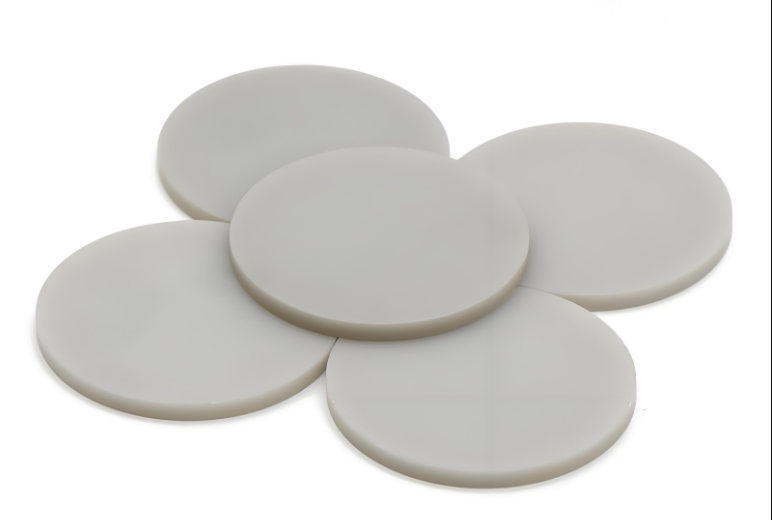
Renowned for its exceptional thermal performance, AlN is a cornerstone for high-power device ceramic substrates.
- Excellent Thermal Conductivity: Typically exceeding 170 W/m·K, it rivals beryllium oxide without the toxicity, enabling efficient heat dissipation in dense layouts.
- Low CTE Match: Its coefficient of thermal expansion closely aligns with silicon (Si) and silicon carbide (SiC), minimizing thermal stress in bonded assemblies.
- High Electrical Insulation: Offers excellent dielectric strength, crucial for high-voltage applications like IGBT ceramic substrates and automotive power modules.
Its properties make it ideal for laser diode ceramic heat sinks, RF packages, and substrates for wide-bandgap semiconductors. Puwei's expertise in AlN Ceramic Substrate manufacturing ensures precise metallization and reliable performance.
Silicon Nitride (Si3N4) Ceramic Substrate: The Robust All-Rounder
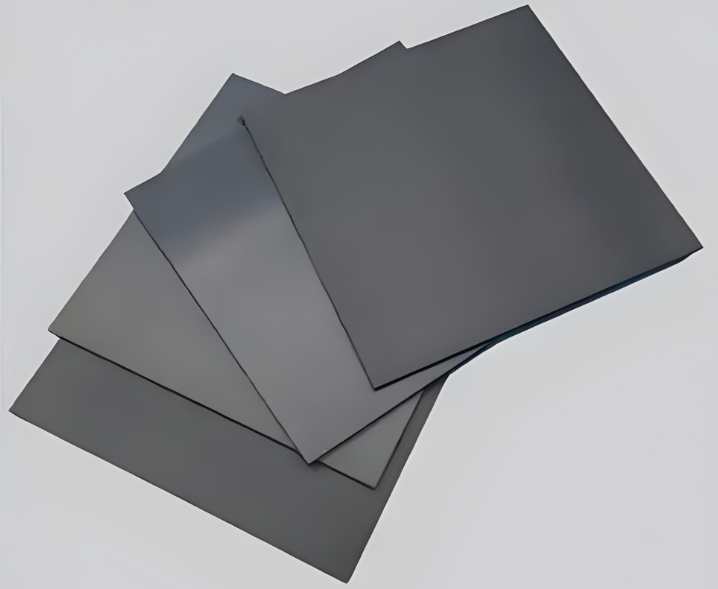
While offering high thermal conductivity (>90 W/m·K), Si3N4's standout feature is its exceptional mechanical integrity.
- Superior Fracture Toughness & Thermal Shock Resistance: Withstands extreme and rapid temperature cycling, perfect for demanding environments in automotive and aerospace.
- Excellent Mechanical Strength: High flexural strength prevents cracking under mechanical load, enhancing durability.
- Good CTE Match for SiC: An excellent substrate choice for emerging silicon carbide power modules.
This combination makes Si3N4 a preferred choice for structural ceramic parts in semiconductor manufacturing equipment and under-hood automotive electronic ceramic substrates.
Key Performance Indicators for Procurement Evaluation
When sourcing high thermal conductivity ceramic substrates, engineers and buyers must verify these specs:
- Thermal Conductivity (W/m·K): The primary metric for heat spreading capability.
- CTE (ppm/K): Must match the attached die (Si, GaN, SiC) to ensure long-term reliability.
- Dielectric Strength & Volume Resistivity: Critical for maintaining electrical isolation in high-power circuits.
- Flexural Strength and Fracture Toughness: Indicates ability to survive assembly processes and operational stresses.
- Surface Roughness and Metallization Quality: Affects bond strength and thermal interface efficiency for circuits or heat sinks.
Core Application Areas Driving Demand
The unique properties of AlN and Si3N4 substrates solve thermal challenges in several high-growth sectors:
- Power Electronics & Automotive: Insulated Gate Bipolar Transistors (IGBTs), rectifiers, and electric vehicle motor controller modules. AlN ceramic substrates efficiently manage heat in compact, high-current designs.
- RF & Microwave Communications: 5G base station amplifiers using GaN devices require low-loss, high-thermal-conductivity bases like AlN Ceramic Components to maintain signal integrity and power output.
- LED Lighting: High-power LED arrays use these ceramics as LED ceramic substrates to prevent lumen depreciation and color shift.
- Industrial Lasers: Serving as laser ceramic heat sinks, they stabilize the operating temperature of diode and fiber lasers.
- Semiconductor Manufacturing: Used as plasma-resistant components, wafer handling arms, and heater plates due to their corrosion resistance in plasma environments and thermal stability.
FAQ: High Thermal Conductivity Ceramic Substrates
Q1: Between AlN and Si3N4, which is better for my power module?
A: The choice hinges on your priority. For ultimate thermal performance (e.g., very high-power density GaN), AlN ceramic circuit boards are superior. If the application involves severe mechanical vibration or thermal cycling (e.g., automotive traction inverters), Si3N4's toughness may be the deciding factor.
Q2: How does metallization work on these substrates, and what are the options?
A: Both AlN and Si3N4 offer good metallization compatibility. Common methods include DC/RF sputtering of Ti/Cu/Ni/Au, screen printing of thick-film Au or Ag-Pd, and active metal brazing (AMB) for direct bonded copper (DBC). Puwei provides various AlN Ceramic Structure Parts with customized metallization patterns.
Q3: Are these substrates suitable for prototyping and custom geometries?
A: Yes. Advanced ceramic machining allows for prototypes and production of complex shapes, including discs, plates, and intricate AlN ceramic components. It's advisable to consult with your supplier early in the design phase.
Conclusion
The evolution towards more powerful and compact electronic systems is inextricably linked to advanced material solutions. High thermal conductivity AlN and Si3N4 ceramic substrates are not just components; they are enablers of reliability and performance in cutting-edge technologies. By focusing on the key properties and applications outlined, procurement experts and design engineers can make informed decisions to overcome their most pressing thermal management challenges. Partnering with a skilled manufacturer like Puwei ensures access to high-quality, reliable substrates tailored for power semiconductor and microwave RF ceramic substrate applications.