

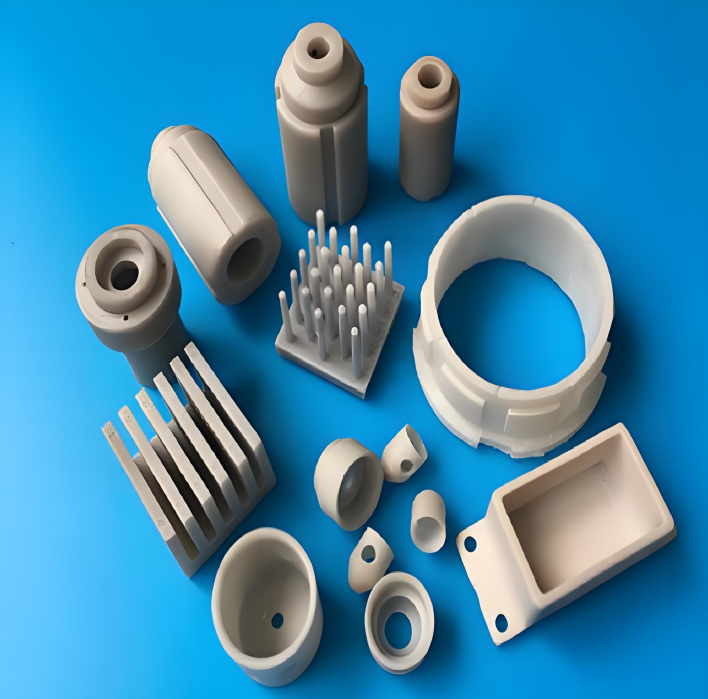
Aluminum nitride ceramics, a cutting-edge class of ceramic materials, have become increasingly vital in modern industrial applications due to their exceptional properties. Among the most widely used forms of these materials are aluminum nitride substrates, which play a critical role in electronics, thermal management, and advanced engineering systems.
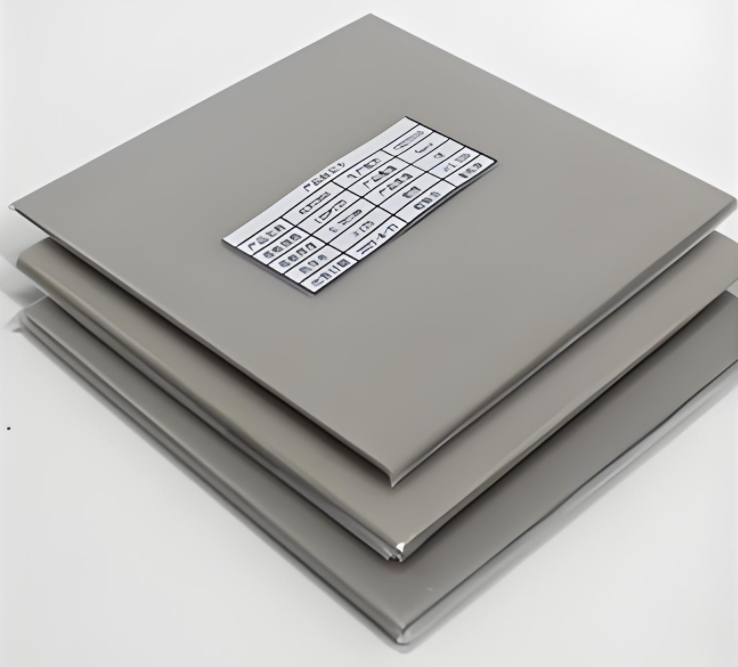
1.Exceptional Thermal Conductivity
One of the standout features of aluminum nitride ceramics is their remarkable thermal conductivity, ranging from 170 to 200 W/m·K. This property makes aluminum nitride substrates highly effective for heat dissipation, particularly in power electronics, LED lighting, and high-power laser systems. Compared to traditional ceramic materials like alumina, aluminum nitride offers superior thermal management, ensuring optimal performance and reliability in demanding environments.
2.Superior Electrical Insulation
Aluminum nitride ceramics exhibit excellent electrical insulation properties, characterized by high dielectric strength and low electrical conductivity. This makes aluminum nitride substrates ideal for use in high-voltage and high-frequency applications, such as semiconductor devices and integrated circuits. Their ability to prevent electrical leakage ensures stable and efficient operation of electronic components.
3.Low Thermal Expansion Coefficient
The thermal expansion coefficient of aluminum nitride ceramics is closely matched to that of silicon, a key material in semiconductor manufacturing. This compatibility minimizes thermal stress and prevents issues such as cracking or delamination in electronic devices. As a result, aluminum nitride substrates are widely used in applications requiring precise thermal and mechanical stability.
4.Chemical Stability and Corrosion Resistance
Aluminum nitride ceramics are highly resistant to chemical corrosion and can withstand exposure to harsh environments, including acids, alkalis, and high temperatures. This chemical stability makes them suitable for use in corrosive industrial settings, such as chemical processing equipment and high-temperature reactors.
5.High Mechanical Strength and Hardness
Despite their lightweight nature, aluminum nitride ceramics possess impressive mechanical strength and hardness. This ensures that aluminum nitride substrates can endure mechanical stress and wear, making them durable and reliable for demanding applications in aerospace, automotive, and industrial machinery.
6.Low Dielectric Loss
Aluminum nitride ceramics exhibit low dielectric loss, which is critical for high-frequency applications. This property minimizes energy loss and ensures efficient signal transmission in RF and microwave devices, making aluminum nitride substrates a preferred choice in telecommunications, radar systems, and advanced electronics.
7.Biocompatibility
In addition to their technical applications, aluminum nitride ceramics are biocompatible, making them suitable for medical devices and implants. Their non-toxic nature and resistance to bodily fluids ensure safe and long-term use in the human body, expanding their utility in the healthcare sector.
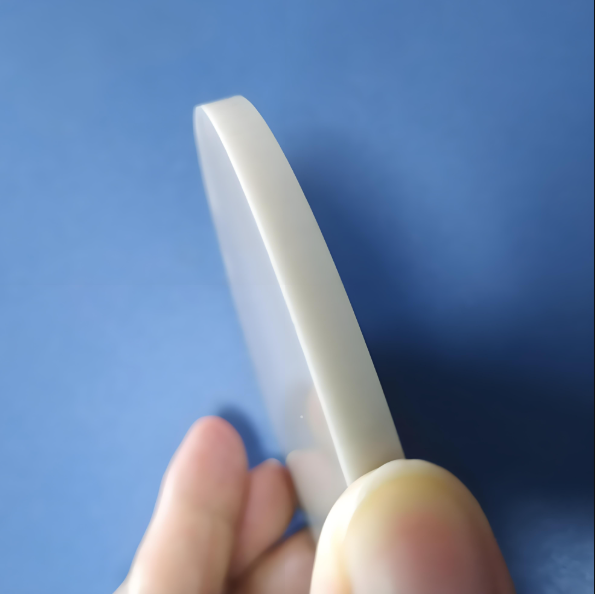
Aluminum nitride ceramic products, particularly aluminum nitride substrates, offer a unique combination of high thermal conductivity, excellent electrical insulation, low thermal expansion, chemical stability, mechanical strength, and low dielectric loss. These properties make them indispensable in modern electronics, thermal management, and high-performance engineering applications.