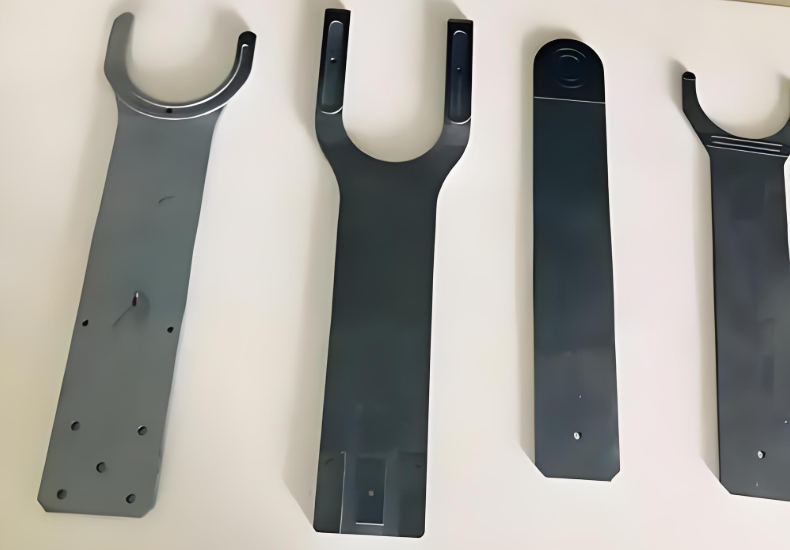
Semiconductor robotic arms are key components in semiconductor equipment, typically made up of a controller, driver, arm, and end effector. They are known for their high cleanliness, stability, precision, efficiency, and reliability. These robotic arms are mainly used in the front-end processes of semiconductor manufacturing, handling, transporting, and positioning semiconductor wafers.
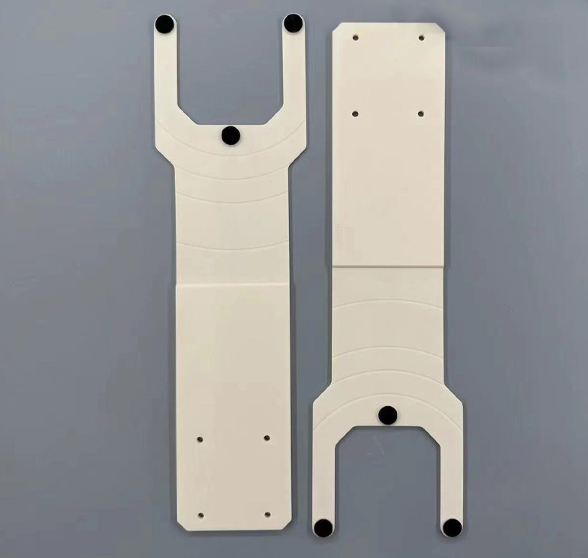
Semiconductor robotic arms use vacuum suction to pick up wafers—similar to how a suction cup works—attaching the wafer to quartz or Alumina Ceramic fingers. The Alumina Ceramic Robotic Arm then moves the wafer through extension, rotation, and lifting motions.
"High-speed" and "clean" are the core requirements for wafer-handling equipment. To meet these demands, the components must meet extremely strict performance standards. Since most processes take place in vacuum, high-temperature, or corrosive gas environments, the robotic arms must have excellent physical properties, including high mechanical strength, corrosion resistance, heat resistance, wear resistance, hardness, and insulation. Advanced ceramic materials perfectly fit these needs.
Both Alumina Ceramics and SiC Ceramic Products offer dense structures, high hardness, wear resistance, excellent heat resistance, strong mechanical performance, high-temperature insulation, and corrosion resistance—making them ideal materials for semiconductor robotic arms. However, considering cost and machining difficulty, Alumina Ceramic Robotic Arms offer better cost-effectiveness.
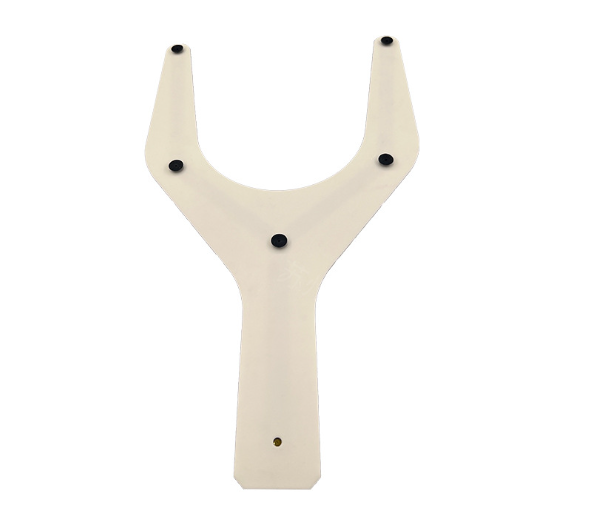
Why Choose Alumina Ceramic Robotic Arms?
1.High Strength & Hardness – Semiconductor arms typically use high-purity alumina; the purer the alumina, the stronger the arm.
2.Superior Insulation – Room-temperature resistivity reaches 10¹⁵ Ω·cm, with an insulation strength of 15 kV/mm.
3.High Melting Point (2050°C) – Minimal thermal deformation during wafer heat treatment, reducing part distortion.
4.Excellent Chemical Stability – Alumina ceramics leave no contaminating particles, static charges, or metal ions, ensuring wafer purity.
5.Mature Processing & Cost-Effective – Alumina is the most widely used ceramic, easier to source, more affordable, and with well-established machining techniques.
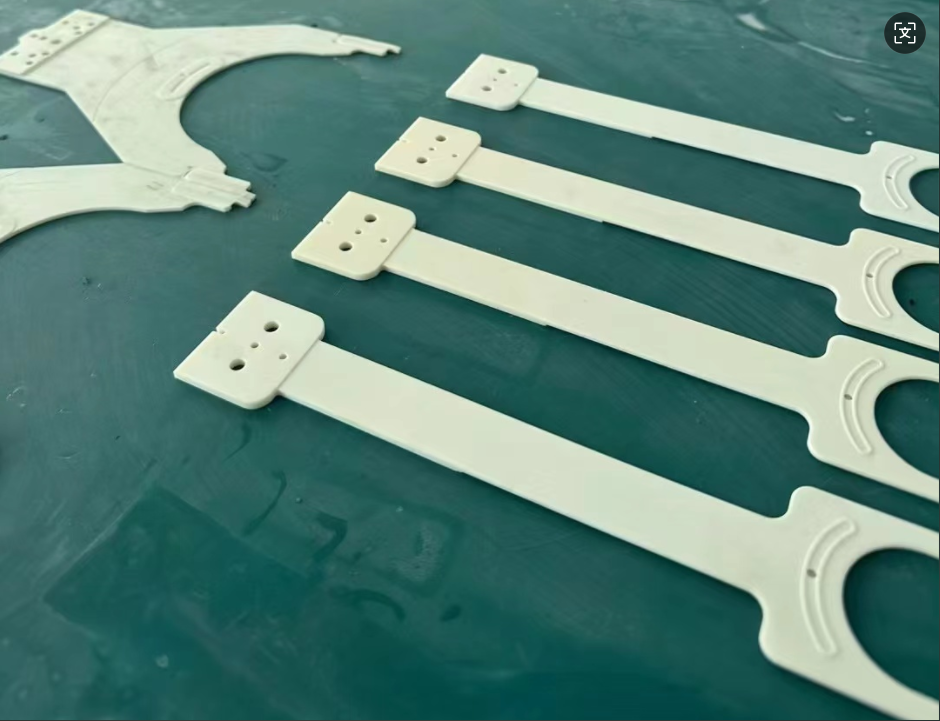
There are generally three types of ceramic robotic arms: Alumina Ceramic Robotic Arms, black ceramic arms, and composite ceramic arms. Black alumina helps absorb heat or block light, which is crucial for light-sensitive semiconductor processes. All these ceramics share high density, hardness, wear resistance, heat resistance, mechanical strength, insulation, and corrosion resistance—making them the best choice for semiconductor robotic arms.