

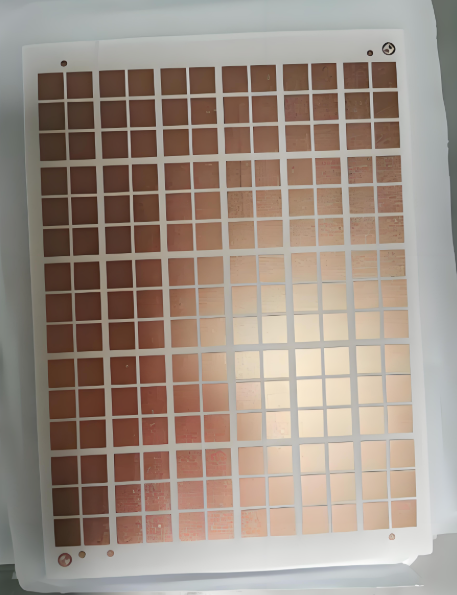
Direct Bonded Copper (DBC) ceramic substrates are widely recognized for their exceptional performance in demanding electronic environments, particularly in power modules and industrial systems. Their unique structure, combining a ceramic insulating layer with directly bonded copper, offers multiple engineering advantages:
- Excellent Electrical Insulation
The ceramic core provides high dielectric strength, efficiently isolating high-voltage components to ensure circuit safety.
- Superior Thermal Conductivity
DBC substrates offer high thermal conductivity, quickly transferring heat from active chips to heat sinks. This ensures reliable thermal management and prevents component overheating.
- Thermal Expansion Compatibility
With a thermal expansion coefficient close to that of silicon chips, DBC substrates minimize thermal stress, enhancing long-term device reliability.
- High Mechanical Strength
The robust ceramic base provides solid resistance against mechanical shock and external forces, supporting the structural integrity of the assembly.
- Ease of Circuit Design
DBC substrates can be patterned like traditional PCBs, allowing for complex circuit layouts and integration in advanced electronic systems.
- Enhanced Durability
With excellent thermal cycling stability and corrosion resistance, DBC substrates maintain performance across harsh operational environments.
These features make DBC ceramic substrates an ideal solution for applications such as electric vehicles, renewable energy inverters, industrial drives, and aerospace systems—where reliability, efficiency, and heat management are critical.
Explore more:DBC Metallization of Alumina Substrate/Direct Bonded Copper of Alumina Substrate/Alumina Ceramic DBC Substrate/Metalization Ceramics