

Ceramic substrates have become a key material in modern electronic packaging. Among various types—including plastic, metal, and composite—ceramic substrates stand out due to their superior thermal conductivity, heat resistance, electrical insulation, and dimensional stability. These attributes are particularly critical in high-performance devices such as IGBT modules, laser diodes (LD), high-power LEDs, and concentrated photovoltaic (CPV) systems.
Ceramic substrates are typically classified by fabrication method: DPC (Direct Plated Copper), DBC (Direct Bonded Copper), AMB (Active Metal Brazing), LTCC (Low-Temperature Co-Fired Ceramic), and HTCC (High-Temperature Co-Fired Ceramic). Common materials used include alumina, aluminum nitride, and silicon nitride. Each material aligns with specific processes—alumina is often used in DBC, aluminum nitride in both DBC and AMB, and silicon nitride primarily in AMB.
DPC Substrate Technology and Advantages
DPC ceramic substrates are produced using a surface metallization process involving vacuum deposition techniques like evaporation and magnetron sputtering. Initially, a thin layer of titanium or chromium is sputtered, followed by copper. The copper layer is then thickened by electroplating. After patterning through conventional PCB techniques, additional copper is deposited to finalize circuit formation.
Key features of DPC ceramic substrates include:
1. Low signal loss in communication modules
2. High thermal conductivity for efficient heat dissipation
3. Matched thermal expansion to reduce mechanical stress
4. Strong adhesion between ceramic and metal layers
5. High operating temperature tolerance
6. Excellent electrical insulation
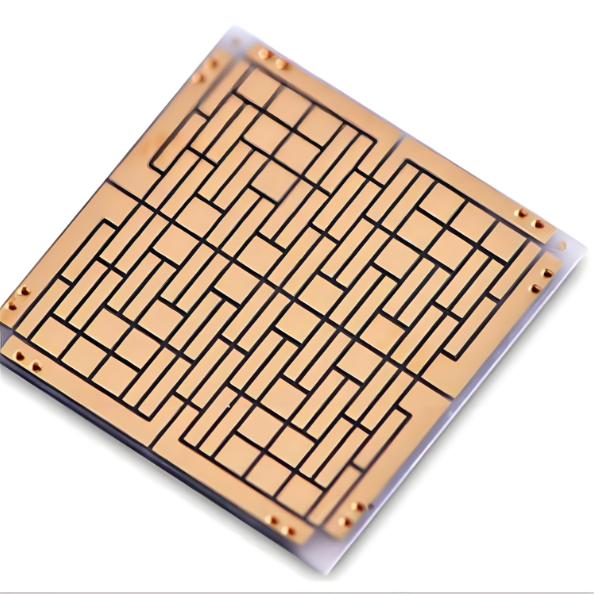
These properties make DPC substrates a reliable choice across various industries. They are widely adopted in high-power LED applications, such as automotive headlights, UV LEDs, and smartphone flash modules. Moreover, their role is expanding in fields like semiconductor lasers, power electronics, microwave devices, optical communication, RF components, and VCSEL (Vertical-Cavity Surface-Emitting Lasers).
As demand for compact, high-performance electronics continues to grow, DPC ceramic substrates are expected to play a vital role in enabling the next generation of advanced electronic systems.
Explore more:Metallized Substrate For Thin Film Circuits,Dpc Substrate For Thin Film Circuits,Dpc Substrate For Ics