

Aluminum nitride (AlN) ceramic substrates have become a vital material across multiple industries thanks to their outstanding combination of properties. With excellent insulation, high thermal conductivity, chemical stability, and a thermal expansion coefficient close to that of silicon, AlN ceramics are increasingly used in advanced electronics and high-performance applications.
1.As a Substrate Material
Traditionally, alumina and beryllium oxide ceramics were widely used for high-power hybrid integrated circuits. However, alumina offers relatively low thermal conductivity, while beryllium oxide, despite its good performance, is costly and toxic. AlN emerged as a superior alternative in the mid-1980s, balancing performance, cost, and safety, making it a strong choice for modern electronic packaging.
2.As an Electronic Film Material
AlN has been studied as an electronic thin-film material since the 1960s and plays a critical role in microelectronics and optoelectronics. As part of the III-nitride semiconductor family, AlN is considered a core material of the third-generation semiconductors, following silicon and gallium arsenide. Its wide bandgap properties continue to attract global research and development.
3.As Crucibles and Refractory Coatings
Thanks to excellent corrosion resistance, AlN can be used for crucibles and refractory coatings. It withstands contact with molten metals such as aluminum, copper, and iron without reacting, and it remains stable in various molten salts. In semiconductor manufacturing, AlN crucibles can replace quartz crucibles when synthesizing gallium arsenide, eliminating silicon contamination and ensuring higher-purity results.
4.Expanding Applications
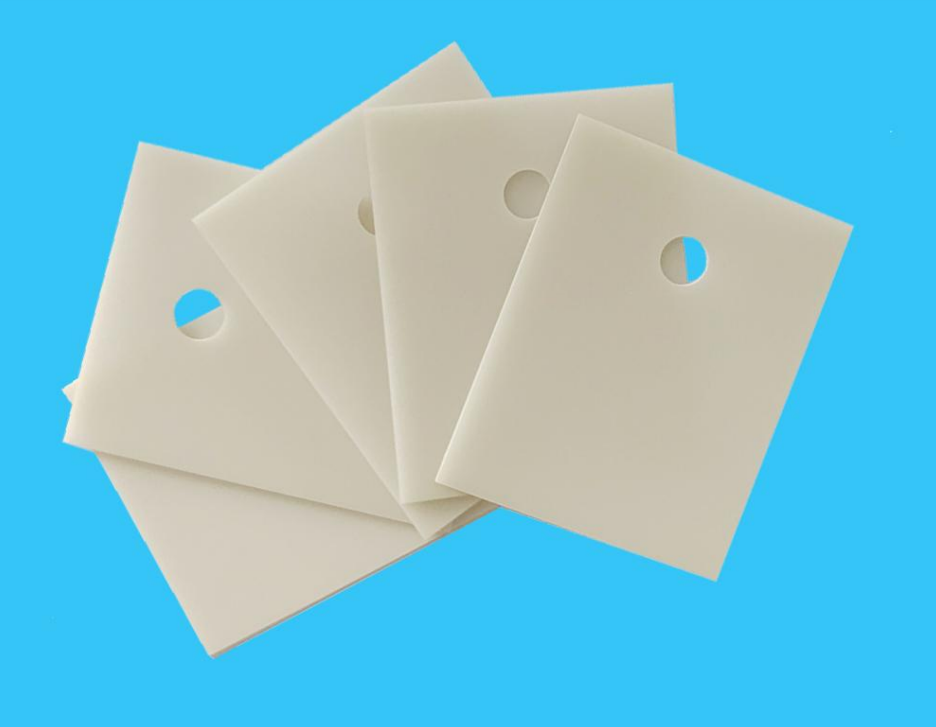
The versatility of AlN ceramics extends to piezoelectric thin films, electronic device packaging, dielectric isolation, blue and UV light-emitting devices, adhesives, thermal interface materials, and heat-dissipation pads. As research and industrial demand grow, the potential applications of aluminum nitride ceramics continue to expand, making them an increasingly important material in modern technology and manufacturing.
Explore more:96 Alumina Ceramic Substrate/Si3N4 Ceramic Products/Aluminum Nitride Ceramics/Metalization Ceramics