

Aluminum nitride (AlN) ceramic substrates are widely valued for their outstanding electrical insulation and high thermal conductivity, positioning them as one of the most promising materials for advanced packaging applications. To ensure reliable sealing, secure component mounting, and stable terminal connections, metallization of the ceramic surface is a crucial step.
Among the common metallization methods—thin-film, thick-film, refractory metallization, electroless plating, and direct bonded copper (DBC)—the DBC process has become one of the most widely applied. DBC works by bonding copper foil directly to the ceramic surface through a controlled oxidation process, forming a transitional alumina (Al₂O₃) layer. This creates a strong bond between copper and the AlN substrate, resulting in excellent adhesion, high thermal transfer efficiency, and reliable mechanical performance.
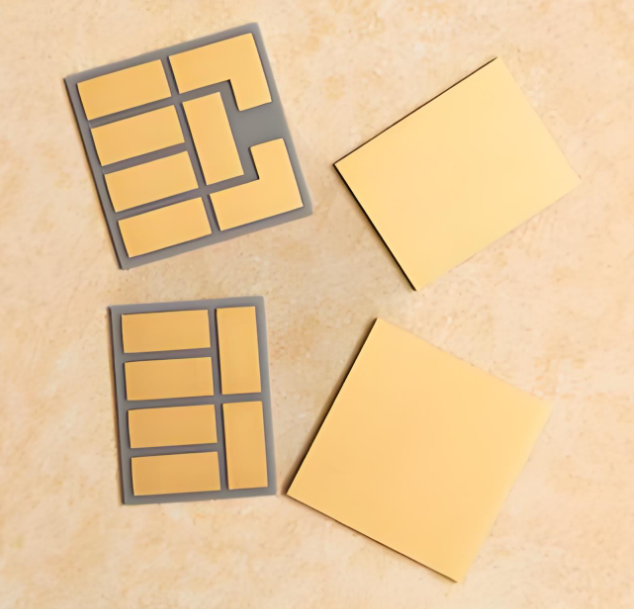
The advantages of DBC technology include superior heat dissipation, robust bonding strength, and suitability for large-scale production, although the oxidation process requires precise control. With these benefits, metallized AlN substrates have become the preferred choice in semiconductor electronics, RF devices, power amplifiers, and integrated circuits.
By combining thermal management, electrical insulation, and mechanical durability, AlN ceramic substrates continue to play an essential role in modern electronic packaging and high-power device applications.
Explore more:96 Alumina Ceramic Substrate/Si3N4 Ceramic Products/Aluminum Nitride Ceramics/Metalization Ceramics