

Key Properties of 99.6% Alumina for High-Power Electronics
In the realm of high-power electronics—spanning electric vehicle inverters, industrial motor drives, and renewable energy converters—the substrate material is a critical, yet often overlooked, component. For procurement managers evaluating parts that must withstand high voltages, significant thermal cycling, and harsh environments, 99.6% purity Alumina (Al₂O₃) ceramic substrates stand out as a robust and cost-effective solution. This article examines the specific properties that make this material essential and outlines key considerations for sourcing.
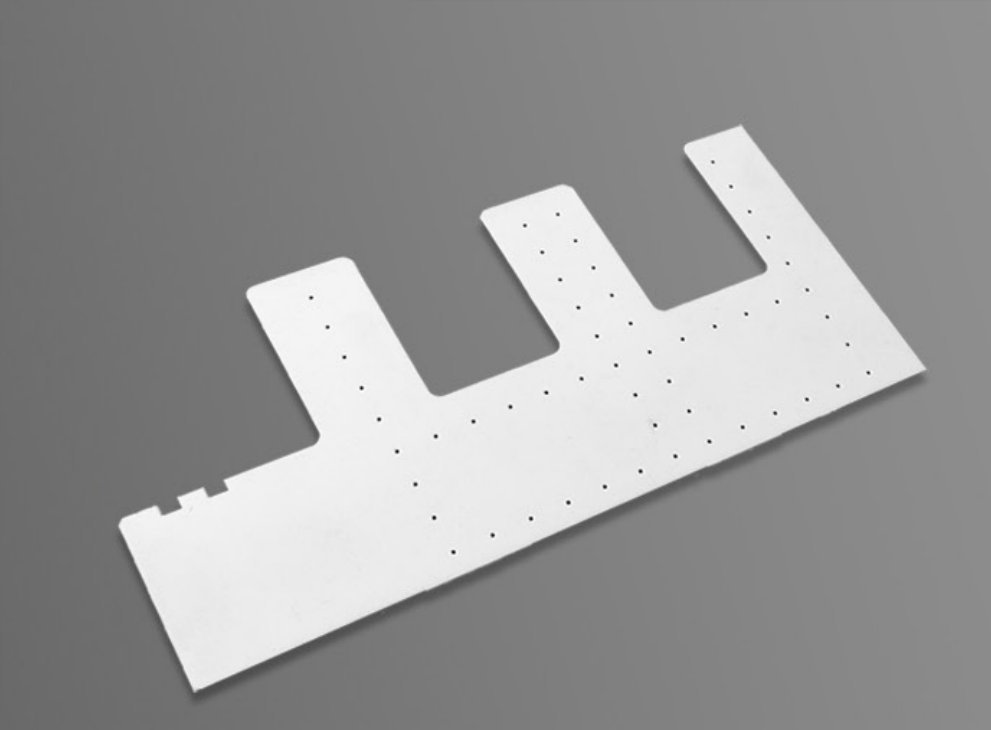
The Performance Advantage of 99.6% Purity
The step from 96% to 99.6% alumina purity delivers measurable improvements in performance, critical for power-dense applications. These advantages rest on three fundamental pillars:
1. Optimized Thermal Management
With a thermal conductivity of 24-30 W/m·K, 99.6% Al₂O₃ effectively transfers heat away from semiconductor dies (e.g., IGBTs, SiC MOSFETs). This prevents localized overheating, reduces thermal stress, and is fundamental for the long-term reliability of power modules in new energy applications. Higher purity minimizes grain boundary impurities, leading to more consistent thermal performance.
2. Superior Electrical Insulation & Dielectric Strength
Dielectric strength exceeding 15 kV/mm ensures safe electrical isolation in high-voltage circuits (600V, 1200V+). The high purity reduces ionic impurities that can cause leakage currents or premature dielectric breakdown under operational stress.
3. Excellent Mechanical & Dimensional Stability
High flexural strength (300-400 MPa) and a Coefficient of Thermal Expansion (CTE) that closely matches copper (used in DBC processes) are vital. This compatibility minimizes stress during power cycling, preventing copper layer delamination. Controlling substrate warpage is also crucial; advanced manufacturing techniques can achieve warpage below 0.25% for reliable assembly.
Top 5 Sourcing Considerations for Procurement Managers
-
Cost-to-Performance Ratio
While Aluminum Nitride (AlN) offers higher thermal conductivity, its cost is significantly greater. 99.6% Alumina provides an optimal balance, delivering reliable performance for many applications without the premium cost, directly impacting the Bill of Materials (BOM).
-
Metallization Quality and Bond Integrity
The substrate's performance hinges on its bond with copper. Evaluate the supplier's process control for DBC metallization—key metrics include copper peel strength, voiding rates, and overall bond reliability for thermal cycling endurance.
-
Material and Dimensional Consistency
Batch-to-batch consistency in thickness, surface finish, and flatness (camber) is essential for automated assembly yields. Require material certifications and evidence of a mature Quality Management System (e.g., ISO 9001:2015).
-
Technical Support and Customization Capability
Can the supplier support custom geometries, laser-cut features, or specific metallization patterns? Strong OEM/ODM support and engineering collaboration are vital for optimizing designs and solving manufacturability challenges.
-
Supply Chain Reliability and Lead Times
Assess the supplier's production capacity and raw material sourcing to ensure they can meet volume demands and provide stable lead times, especially during market upswings.
Current Industry Trends and Drivers
Electrification as the Primary Demand Driver
The rapid growth of Electric Vehicles (EVs), charging infrastructure, and renewable energy systems is directly increasing demand for reliable, high-power electronic modules that utilize alumina substrates.
The Push for Higher Power Density
The industry trend towards smaller, more powerful modules necessitates substrates with better thermal performance. While 99.6% Alumina remains a workhorse, there is growing adoption of Silicon Nitride (Si₃N₄) AMB substrates for the most demanding, high-reliability applications, illustrating material evolution in the sector.
Compatibility with Wide Bandgap Semiconductors
The adoption of Silicon Carbide (SiC) and Gallium Nitride (GaN) devices continues. High-quality 99.6% Alumina remains a viable and cost-effective substrate choice for many SiC applications, particularly when paired with advanced DBC metallization.
Primary Application Areas
- IGBT & Power MOSFET Modules: Core substrate for motor drives, UPS systems, and industrial converters.
- Automotive Power Electronics: Used in EV main inverters, DC-DC converters, and onboard chargers.
- Renewable Energy Inverters: Critical for solar photovoltaic and wind power conversion systems.
- Power Control Stacks: Provides insulation and thermal spreading for thyristors and diodes in high-voltage controllers.
Frequently Asked Questions (FAQ)
What is the main advantage of 99.6% over 96% Alumina?
The higher purity directly improves thermal conductivity, dielectric strength, and mechanical strength. It also reduces impurities like silica, which can degrade performance at high temperatures.
How does 99.6% Alumina compare thermally to Aluminum Nitride (AlN)?
AlN has a much higher thermal conductivity (170-220 W/m·K vs. 24-30 W/m·K). AlN is superior for the highest power-density applications where heat is the limiting factor. 99.6% Alumina offers a more cost-effective solution where its thermal performance is sufficient.
Can substrates be supplied with pre-bonded copper (DBC)?
Yes. Manufacturers specializing in Direct Bonded Copper (DBC) on Alumina can provide substrates with various copper thicknesses, etched to specific circuit patterns, offering a complete, assembly-ready solution.
What are typical size and thickness ranges?
Thickness can range from ~0.25mm to several millimeters. Suppliers experienced in large-format substrates (e.g., over 200mm per side) with controlled warpage are essential for many high-power module designs.
References & Further Reading
- Iqbal, A., et al. (2019). "Ceramic Substrates for Advanced Power Electronic Modules: A Review." Journal of Electronic Materials.
- Gong, M. R., & Wang, H. (2020). "Thermal Management of High-Power IGBT Modules Using Al₂O₃ and AlN DBC Substrates." IEEE Transactions on Power Electronics.
- International Electrotechnical Commission (IEC). IEC 61249-2-21: Materials for printed boards.
- Wikipedia contributors. "Aluminium oxide." In Wikipedia, The Free Encyclopedia.