

Why Thermal Conductivity is Critical in AlN Ceramic Substrates
In the relentless pursuit of higher power density and miniaturization in electronics, thermal management has emerged as the primary bottleneck. For procurement managers and design engineers sourcing components for next-generation systems, Aluminum Nitride (AlN) ceramic substrates represent a technological leap forward, primarily due to their exceptional thermal conductivity. This article explores why this single property is pivotal and what it means for applications from EV power trains to 5G infrastructure.
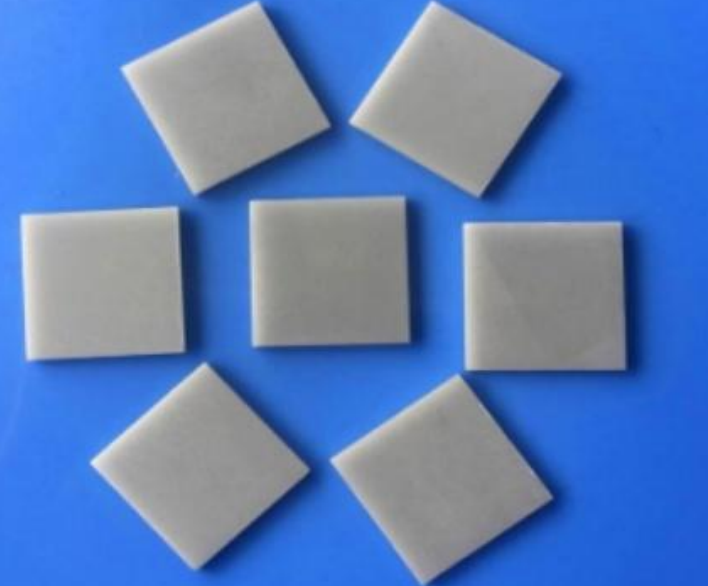
The Physics of Heat Dissipation: Why AlN Excels
Thermal conductivity (κ) measures a material's ability to conduct heat. In electronic packaging, efficient heat transfer from the semiconductor die (the heat source) to the heatsink or environment is critical to prevent performance throttling and failure.
Thermal Conductivity Comparison (W/m·K)
- FR-4 (Standard PCB): 0.3 - 0.4
- Alumina (96% Al₂O₃): 20 - 25
- Alumina (99.6%): 24 - 30
- Aluminum Nitride (AlN): 170 - 220
- Beryllium Oxide (BeO): 250 - 300 (Toxic)
- Silicon Carbide (SiC): 120 - 140
With a thermal conductivity of ≥ 175W/m·K (and premium grades ≥ 200W/m·K), AlN conducts heat approximately 7-8 times better than standard Alumina. This fundamental property translates directly into several system-level advantages, making it a cornerstone for advanced Electronic Ceramic Products.
The Direct Impact of High Thermal Conductivity
1. Reduced Junction Temperature & Enhanced Reliability
Every 10°C increase in semiconductor junction temperature can halve its operational lifetime (Arrhenius equation). AlN's superior heat spreading lowers the thermal resistance between the die and the cooling system, directly reducing the junction temperature (Tj) and exponentially increasing device reliability and mean time between failures (MTBF).
2. Increased Power Density & Miniaturization
Higher thermal conductivity allows designers to pack more power into a smaller footprint or operate existing designs at higher currents without overheating. This is essential for the ongoing miniaturization of EV power inverters, high-power LED arrays, and RF power amplifiers for 5G.
3. Mitigation of Thermal Stress and Warpage
By efficiently spreading heat, AlN minimizes localized hotspots and large temperature gradients across the substrate. This, combined with a Coefficient of Thermal Expansion (CTE) closely matching silicon (4.5 ppm/K for AlN vs. 4.1 ppm/K for Si), drastically reduces thermomechanical stress, preventing solder joint fatigue, die cracking, and substrate warpage—a common challenge with standard Alumina Ceramic Substrates in high-cycling applications.
5 Key Considerations for Sourcing AlN Substrates
-
Verified Thermal Conductivity Values
Do not rely on generic datasheets. Request batch-specific test reports for thermal conductivity (κ). Values can vary based on purity, grain size, and sintering process. Ensure the supplier provides consistent, certified performance.
-
CTE Matching with Semiconductor Dies
Confirm the substrate's CTE to ensure compatibility with your specific die material (Si, SiC, GaN). Mismatched CTE is a leading cause of failure in power cycling tests.
-
Metallization Quality for Optimal Heat Transfer
The thermal path is only as strong as its weakest link. The quality of the bonded metal layer (Cu via DPC or DBC) is critical. Evaluate peel strength and void percentage to ensure unimpeded heat flow into the substrate.
-
Dielectric Strength and Purity
High thermal conductivity must not come at the expense of electrical insulation. Ensure the substrate maintains high dielectric strength (>15 kV/mm) and low ionic impurity levels (especially for high-reliability applications).
-
Total Thermal Solution, Not Just a Part
Partner with suppliers who understand the entire thermal stack—from die attach material to heatsink interface. They should offer design support to optimize the substrate geometry, metallization pattern, and even recommend compatible Metallized Ceramics for package housings.
Technology Dynamics & Future Trends
Rise of Wide Bandgap Semiconductors (SiC/GaN)
These devices operate at higher temperatures, frequencies, and power densities than silicon. AlN, with its excellent thermal and CTE properties, is becoming the substrate of choice to unlock their full potential, particularly in automotive and energy applications.
Advanced Metallization Techniques
Beyond traditional DBC, techniques like Active Metal Brazing (AMB) are gaining traction for even stronger, more reliable bonds, especially when paired with next-generation substrates like Silicon Nitride (Si₃N₄) AMB for extreme mechanical shock resistance.
Integration and 3D Packaging
The drive for heterogeneous integration is pushing for substrates that can manage heat from multiple, disparate chips in a single package. AlN's properties make it a strong candidate for these advanced 2.5D/3D packaging architectures.
How High Thermal Conductivity is Achieved: A Peek into Manufacturing
Producing AlN with consistent, high thermal conductivity is a complex process:
- High-Purity Raw Materials: Starting with AlN powder of exceptional purity and controlled particle size is fundamental.
- Advanced Sintering: Sintering in carefully controlled atmospheres at temperatures exceeding 1800°C is required to achieve high density and minimize oxygen impurities, which are the primary killers of thermal conductivity in AlN.
- Precision Process Control: Every step, from powder mixing to final polishing, must be meticulously controlled to ensure the crystal structure that facilitates efficient phonon (heat) transport.
Suppliers with vertical integration control this entire chain, enabling reliable production of substrates that consistently meet specifications of 175-200+ W/m·K.
FAQ: Thermal Performance of AlN Substrates
Q: Is higher thermal conductivity always better?
A: Generally, yes, for heat dissipation. However, the law of diminishing returns applies. Moving from Alumina (30 W/m·K) to AlN (175 W/m·K) is a dramatic improvement. Moving from 175 to 200 W/m·K offers a smaller relative gain that may not justify a significant cost increase for all applications.
Q: How does surface finish affect thermal performance?
A: A smoother surface finish (e.g., polished) improves the intimacy of contact for die attach or thermal interface materials, reducing interfacial thermal resistance. For the best thermal performance, specify the appropriate surface finish for your assembly process.
Q: Can AlN substrates be made as large as Alumina?
A: Manufacturing large-format AlN substrates is more challenging and costly due to sintering complexities. While possible, it's less common than with large Alumina substrates. Discuss size requirements early with your supplier.
Q: What about the thermal conductivity of metallized AlN?
A: The overall thermal resistance of the assembly includes the metal layer, the bond, and the ceramic. High-quality DBC or DPC metallization with high-purity, thick copper will have excellent lateral thermal conductivity, complementing the AlN's vertical conduction.
References & Technical Sources
- Slack, G. A., et al. (1987). "The Intrinsic Thermal Conductivity of AIN." Journal of Physics and Chemistry of Solids.
- Imanaka, Y. (2005). Multilayered Low Temperature Cofired Ceramics (LTCC) Technology. Springer.
- IEEE Power Electronics Society. (2022). "Trends in Thermal Management Materials for Wide Bandgap Semiconductors." IEEE Power Electronics Magazine.
- Wikipedia contributors. (2023). "Aluminium nitride." In Wikipedia, The Free Encyclopedia.
- Technical forum discussions on "AIN vs. BeO vs. Al₂O₃ for Thermal Management" on platforms like Stack Exchange (Engineering) and ResearchGate.