

In engineering applications where extreme conditions—high temperatures, mechanical stress, corrosive environments, and severe wear—converge, traditional materials often reach their breaking point. For procurement managers sourcing components for aerospace, advanced manufacturing, and energy systems, Silicon Nitride (Si₃N₄) Ceramic Structural Components offer a superior solution. This article examines why this advanced ceramic is becoming indispensable in the most challenging structural roles and provides a framework for evaluation and sourcing.
The Unique Property Profile of Silicon Nitride
Silicon Nitride's dominance in demanding applications stems from a rare combination of properties not found in metals, polymers, or even other ceramics. Its performance is defined by three key attributes:
1. Exceptional Mechanical Strength & Toughness
With a flexural strength exceeding 900 MPa and a fracture toughness of 6-8 MPa·m¹/², Si₃N₄ possesses a unique resistance to crack propagation and catastrophic failure. This "damage tolerance" allows it to withstand significant mechanical and thermal shock, a critical advantage over more brittle ceramics like standard Alumina Ceramic Substrates.
2. Outstanding High-Temperature Stability
Silicon Nitride retains its mechanical properties at temperatures where metals soften and creep. With a maximum operating temperature of 1300-1600°C in air, it enables applications in high-heat environments such as gas turbine components, industrial furnaces, and semiconductor processing equipment.
3. Superior Wear & Corrosion Resistance
Its inherent hardness (HRA 92-94) provides excellent resistance to abrasion, erosion, and chemical attack. This makes Si₃N₄ ideal for components like bearings, cutting tools, seals, and pump parts exposed to aggressive media and frictional wear.
Primary Application Domains for Si₃N₄ Structural Components
The unique properties of Silicon Nitride translate into critical advantages across several high-performance industries:
- Aerospace & Defense: Used in high-temperature engine components, missile radomes, and bearing balls for auxiliary power units due to its low density and thermal shock resistance.
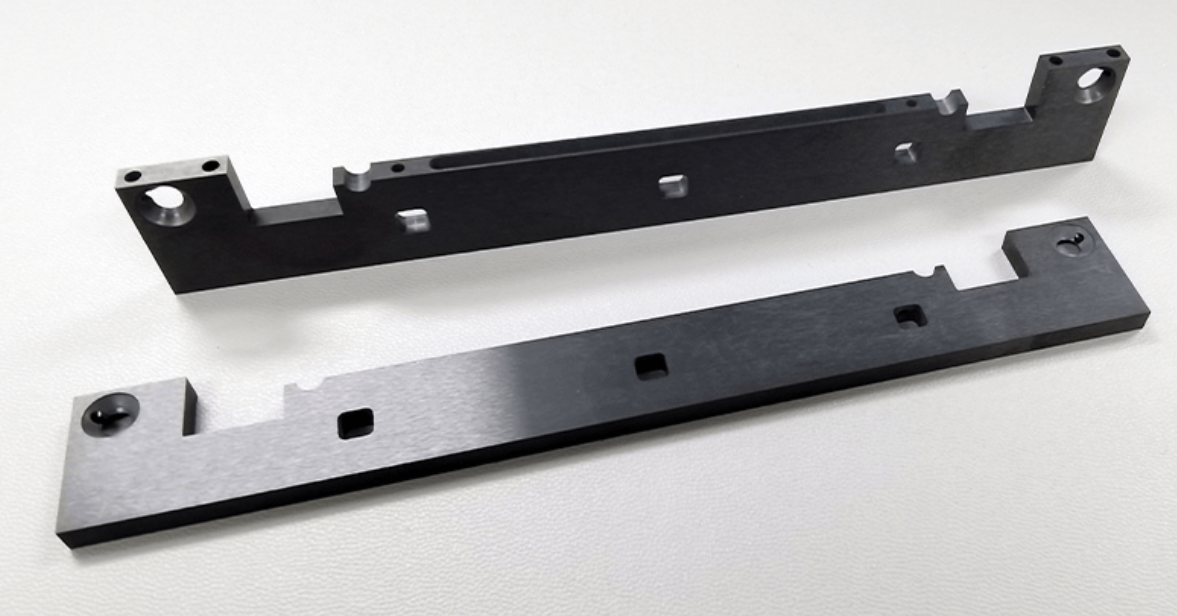
- Advanced Manufacturing & Industrial Automation: Critical for precision robotic arms, end-effectors, wear plates, and guides in harsh factory environments.
- Energy & Power Generation: Components in gas turbines, heat exchangers, and valves benefit from its ability to operate at elevated temperatures without cooling.
- Electronics & Semiconductor: Used as insulating structural parts in high-power modules and as Si₃N₄ AMB substrates for their exceptional combination of thermal conductivity and fracture toughness in power electronics.
- Medical & Chemical Processing: Biocompatible and chemically inert, it is used for prosthetics and components in pumps and valves handling corrosive fluids.
5 Critical Sourcing Considerations for Si₃N₄ Components
-
Mechanical Property Verification
Demand certified test data for flexural strength, fracture toughness, and Weibull modulus (a measure of strength reliability). Component performance is directly tied to these values.
-
Design for Manufacturability (DFM) Expertise
Complex Si₃N₄ parts require sophisticated forming and sintering. Assess the supplier's engineering team's ability to collaborate on design optimization to avoid stress concentrators and ensure dimensional accuracy in the final sintered part.
-
Batch-to-Batch Consistency & Quality Systems
Inconsistency in raw material quality or sintering can lead to performance variations. Partner with suppliers who have robust process controls, ISO 9001:2015 certification, and provide full material traceability.
-
Post-Processing & Finishing Capabilities
Final dimensional tolerances and surface finishes (e.g., Ra values) are often achieved through diamond grinding and polishing. Verify the supplier has the precision machining equipment and expertise to meet your specifications.
-
Total Cost Analysis vs. Traditional Materials
While the unit cost of Si₃N₄ is higher than steel or alumina, its extended service life, reduced maintenance, and elimination of lubrication (in bearing applications) often lead to a lower total cost of ownership (TCO). A comprehensive TCO analysis is essential for justification.
Industry Trends & Technological Advancements
Growing Demand in Electric Vehicle (EV) Power Modules
The automotive industry's shift to 800V architectures and use of Silicon Carbide (SiC) power devices is driving the adoption of Si₃N₄ AMB (Active Metal Brazed) substrates. Their high thermal conductivity, excellent electrical insulation, and, most importantly, superior fracture toughness make them ideal for the extreme thermal and mechanical cycling in EVs.
Additive Manufacturing (3D Printing) of Si₃N₄
Emerging technologies like stereolithography (SLA) and binder jetting are enabling the production of complex, net-shape Si₃N₄ components that were previously impossible or too costly to machine, opening new design possibilities in aerospace and medical fields.
Focus on Lightweighting and Efficiency
Across aerospace and automotive sectors, the push for fuel efficiency is paramount. Si₃N₄'s low density (3.2 g/cm³ vs. ~7.8 g/cm³ for steel) and high strength make it a key enabler for lightweighting strategies without compromising performance or safety.
Best Practices for Designing with Silicon Nitride
Successfully integrating Si₃N₄ components requires attention to its unique characteristics:
- Avoid Sharp Corners: Design with generous radii to minimize stress concentrations that can initiate cracks.
- Consider Dimensional Change: Account for material shrinkage during sintering (typically 15-20%) in the initial design and tooling.
- Specify Tolerances Realistically: While precision machining is possible, extremely tight tolerances on all surfaces significantly increase cost. Define critical dimensions clearly.
- Select Appropriate Joining Methods: For assembly, consider techniques like brazing with specialized fillers, adhesive bonding, or mechanical clamping suitable for ceramics.
Relevant Industry Standards & Specifications
Understanding applicable standards ensures component quality and facilitates integration:
- ASTM F2094/F2094M: Standard Specification for Silicon Nitride Bearing Balls.
- ISO 6474: Implants for surgery – Ceramic materials based on high-purity alumina (Note: Similar standards frameworks are used for bioceramics like Si₃N₄).
- MIL-PRF-32568: Performance specification for silicon nitride ball bearings for aerospace applications.
- Various SEMI Standards: For components used in semiconductor manufacturing equipment.
Reputable manufacturers design and test their Electronic Ceramic Products and structural components in compliance with these and other relevant international standards.
FAQ: Sourcing and Using Silicon Nitride Components
Q: How does Silicon Nitride compare to Silicon Carbide (SiC) for structural parts?
A: While both are advanced ceramics, Si₃N₄ generally offers higher fracture toughness and better thermal shock resistance, making it preferable for applications with significant mechanical or thermal cycling. SiC typically has higher thermal conductivity and hardness. The choice depends on the primary failure mode expected in the application.
Q: What are the typical lead times for custom Si₃N₄ components?
A: Lead times vary by complexity. For a new custom design, expect 12-16 weeks for prototyping, tooling, initial sintering runs, and testing. Production of established designs can be faster. Early engagement with the supplier's engineering team is key to establishing a realistic timeline.
Q: Can Silicon Nitride be metallized or bonded to other materials?
A: Yes. Specialized techniques like Active Metal Brazing (AMB) or molybdenum-manganese (Mo-Mn) metallization can create strong, hermetic bonds between Si₃N₄ and metals like copper or Kovar. This is essential for creating insulated DBC-type circuits or sealed packages.
Q: What are the main limitations of Silicon Nitride?
A: The primary limitations are cost (both material and machining) and design complexity. It is also an electrical insulator, which may not be suitable for applications requiring electrical conductivity. For electrically conductive ceramic components, other materials like certain graphite or specialized composites might be considered.
References & Technical Literature
- Riley, F. L. (2004). "Silicon Nitride and Related Materials." Journal of the American Ceramic Society, 83(2), 245-265.
- Bocanegra-Bernal, M. H., & Matovic, B. (2010). "Mechanical properties of silicon nitride-based ceramics and its use in structural applications at high temperatures." Materials Science and Engineering: A, 527(6), 1314-1338.
- Ziegler, G., et al. (1987). "Improvements in the Mechanical Properties of Sintered Silicon Nitride by the Addition of Oxide Sintering Aids." Advanced Ceramic Materials, 2(4), 1216-1220.
- ASTM International. ASTM F2094/F2094M - Standard Specification for Silicon Nitride Bearing Balls.
- Wikipedia contributors. (2023). "Silicon nitride." In Wikipedia, The Free Encyclopedia.