

In the relentless pursuit of miniaturization, higher power density, and increased functionality in electronics, traditional ceramic machining methods are hitting their limits. For B2B procurement managers in Europe and America sourcing critical components for power electronics, RF communications, and microelectronics packaging, understanding the capabilities and benefits of advanced laser machining is no longer optional—it's a strategic necessity. This article explores how precision laser processes like drilling, scribing, and cutting are enabling next-generation designs and outlines what to look for in a manufacturing partner.
The Evolution of Ceramic Machining: From Mechanical to Photonic
Advanced ceramics like high-purity Alumina and Aluminum Nitride (AlN) are indispensable for modern electronics due to their excellent thermal, electrical, and mechanical properties. However, their inherent hardness and brittleness make them notoriously difficult to machine with conventional diamond tools, often resulting in micro-cracks, chipping, and subsurface damage. Laser machining, a non-contact, thermal or photochemical process, has emerged as the superior solution for creating high-precision features without introducing mechanical stress.
Latest Industry Technology Dynamics
The frontier of laser technology for ceramics is moving towards ultrafast (picosecond and femtosecond) lasers and UV lasers. These systems deliver extremely short, high-energy pulses that ablate material with minimal heat transfer to the surrounding area, virtually eliminating the Heat-Affected Zone (HAZ). This enables the machining of finer features (down to 10µm) and more complex 3D structures in delicate materials like thin AlN ceramic substrates, which are critical for high-frequency module and RF circuit applications. The integration of advanced vision systems and AI for real-time process control is also becoming standard for ensuring micron-level accuracy across production batches.
5 Critical Evaluation Points for Procurement Managers
When sourcing services for Laser Drilling Alumina Ceramic Substrate or Laser Precision Machining of Aluminum Nitride Substrate, focus your supplier assessment on these five key areas:
- Process Capability & Precision Metrics: Can the supplier consistently achieve and document micron-level precision with positioning accuracy of ±2µm and surface roughness (Ra) ≤ 0.4µm? Request sample data and capability studies (Cpk).
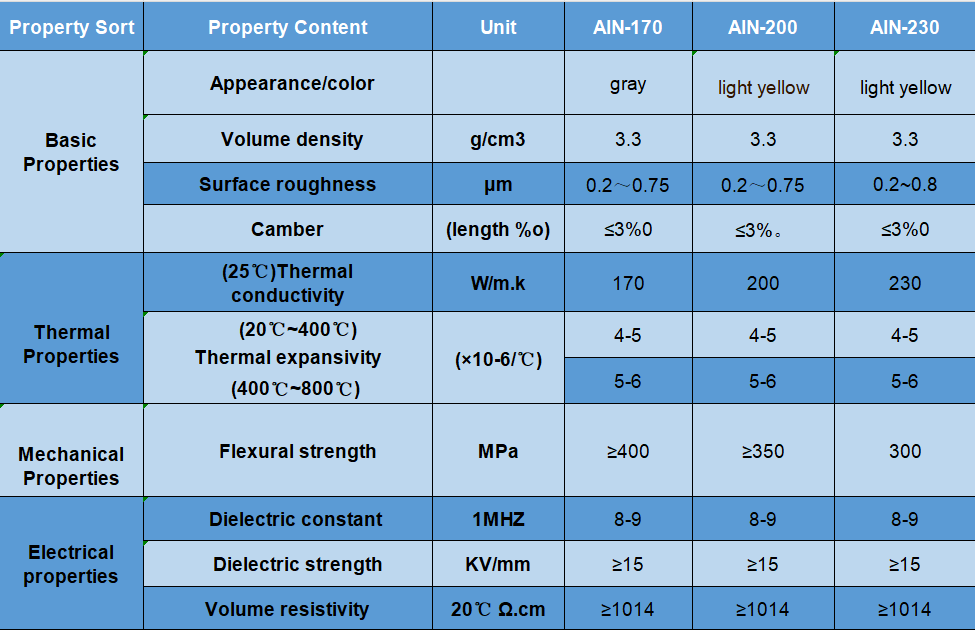
- Material Expertise & Thermal Management: Does the provider have proven experience with the specific ceramic (e.g., 96% Alumina, high-thermal-conductivity AlN) required for your application? Understanding how laser parameters interact with material properties is crucial to prevent cracking or degradation of key properties like thermal conductivity (≥ 175W/m·K for AlN).
- Design for Manufacturing (DFM) Support: Will the engineering team provide feedback on feature design (e.g., minimum spacing, corner radii, aspect ratios up to 10:1) to optimize for laser processing, ensuring yield and cost-effectiveness for your OEM/ODM project?
- Quality Control & Metrology: What in-process and post-process inspection methods are used (e.g., automated optical inspection, confocal microscopy)? Robust QC is essential for features like micro-vias and precise edge cuts.
- Scalability & Lead Time Consistency: Can the supplier handle both rapid prototyping and volume production runs with predictable lead times? A seamless transition from prototype to mass production is vital for time-to-market.
Puwei's Laser Machining Solutions: Where Precision Meets Performance
Puwei's advanced laser machining services are designed to transform complex ceramic component designs into high-reliability reality. We specialize in processing both Alumina Ceramic Substrates and high-performance Aluminum Nitride Substrates, leveraging state-of-the-art photonic technology.
Core Laser Machining Processes and Advantages
Our capabilities encompass the full spectrum of precision laser processes:
- Precision Laser Drilling: Creating micro-vias and through-holes with diameters as small as 10µm and excellent taper control (< 1°). This is essential for creating interconnects in multilayer electronic packaging and fluidic channels in sensor packaging.
- Laser Scribing & Cutting: Enabling clean, straight, or complex contour separation of substrates with minimal kerf width and no mechanical chipping. This non-contact processing method preserves the intrinsic strength of the ceramic, critical for DBC Ceramic Substrate singulation.
- Laser Ablation & Surface Structuring: Selectively removing material to create trenches, cavities, or specific surface textures (roughness patterns) for improved adhesion or optical functions, often used in preparing substrates for thick film hybrid microcircuits.
- High-Aspect-Ratio Machining: Our controlled processes allow for the creation of deep, narrow features that are impossible with mechanical drilling, enabling advanced 3D packaging architectures.
Industry Standards and Puwei's Quality Framework
Precision machining for critical components adheres to stringent standards. These include geometric dimensioning and tolerancing (GD&T) per ASME Y14.5, material property standards (ASTM for ceramics), and customer-specific reliability protocols (e.g., for automotive AEC-Q200).
State-of-the-Art Manufacturing Infrastructure
Our capability is rooted in significant capital investment. Puwei's machining center is equipped with multiple advanced laser platforms, including UV and high-power fiber lasers, housed in a controlled environment to ensure stability. We operate Class 10,000 cleanrooms for machining and handling sensitive substrates to prevent contamination. This infrastructure, combined with our expertise in metallized ceramics, allows us to offer a complete service from bare ceramic to a ready-to-assemble patterned component.
R&D and Innovation: Pushing the Boundaries of Laser Processing
Innovation is at our core. Puwei's dedicated photonics and materials R&D team continuously refines laser parameters and develops novel processes. Key areas of focus include developing laser processes for novel ceramic composites and optimizing laser parameters for ultra-thin substrates (<0.1mm) to enable flexible hybrid electronics. These efforts ensure we can meet the evolving demands of power device and optoelectronics manufacturers.
Design, Handling, and Best Practices for Laser-Machined Ceramics
Success with laser-machined components starts with design and ends with careful handling.
Step-by-Step Design and Ordering Process:
- Design Consultation & DFM Analysis: Share your CAD drawings with our engineers. We will analyze feature sizes, spacing, and material choice to ensure manufacturability and suggest optimizations.
- Material Selection & Specification: Finalize the substrate material (e.g., Alumina, AlN), grade, thickness, and any pre-existing metallization or coatings.
- Prototyping & Validation: We typically run a small prototype batch to validate the process, providing samples for your evaluation and testing.
- Process Qualification & Ramp-up: Upon prototype approval, we qualify the full production process and establish inspection criteria before ramping up to volume production.
Post-Machining Handling & Integration Knowledge:
- Cleaning: Laser-machined parts may have minimal residual debris (recast layer). We provide ultrasonic cleaning with compatible solvents as a standard service to deliver pristine components.
- Inspection: Always inspect critical dimensions and features upon receipt using appropriate metrology tools. Look for clean edges and absence of micro-cracks, especially at corners.
- Storage: Store machined substrates in a dry, clean environment. For parts with delicate micro-features, use protective packaging to prevent contact damage.
- Further Processing: Laser-machined ceramics are often ready for subsequent steps like metallization, plating, or direct bonding. Ensure any post-process thermal budgets are compatible with the base material.
Frequently Asked Questions (FAQ)
Q1: What are the main advantages of laser drilling over mechanical drilling for ceramics?
A: Laser drilling offers four key advantages: 1) Non-contact processing eliminates tool wear and breakage, 2) It enables much smaller hole diameters (down to 10µm) and higher aspect ratios, 3) It allows for drilling on fragile or thin substrates without cracking, and 4) It provides greater flexibility for hole patterns and shapes without the need for custom tooling.
Q2: Does laser machining affect the thermal or electrical properties of the ceramic substrate?
A: When performed correctly with optimized parameters (especially using short-pulse lasers), the effect is minimal. The primary concern is the potential creation of a very thin recast layer or micro-cracks at the edge. Puwei's processes are finely tuned to preserve the bulk material properties, such as the critical thermal conductivity of AlN. We can also include post-processing steps like etching or annealing to restore surface properties if required for high-power microelectronic components.
Q3: What file formats and information do you need to provide for a laser machining quote?
A: To provide an accurate quote and DFM feedback, we typically require: 1) Detailed 2D drawings (DXF, DWG) or 3D CAD models (STEP, IGES) with all critical dimensions and tolerances, 2) Material specification (type, grade, thickness), 3) Quantity (prototype and projected annual volume), and 4) Any specific application or performance requirements (e.g., electrical isolation, thermal path).