

In the high-stakes world of advanced electronics manufacturing, where performance is measured in microns and millikelvins, the surface condition of a ceramic substrate is far more than an aesthetic concern. For B2B procurement managers across Europe and America sourcing components for power devices, RF systems, and microelectronics packaging, a mirror finish on a substrate like Aluminum Nitride (AlN) is a critical performance specification that directly impacts yield, reliability, and system efficiency. This article delves into the science and technology behind achieving optical-grade surfaces on ceramic substrates and explores why this capability is becoming non-negotiable for cutting-edge applications.
The Science of Surface Finish: Why "Mirror" Matters
A mirror finish, typically defined as a surface roughness (Ra) of less than 0.02 μm, transforms a ceramic substrate from a simple structural component into a precision optical and thermal interface. At this level of smoothness, microscopic peaks and valleys that can trap particles, scatter light, impede heat transfer, and disrupt thin-film deposition are virtually eliminated. This is paramount for applications such as high-frequency modules, where surface irregularities can cause signal loss, and for high-power microelectronic components, where even nanoscale air gaps at the interface drastically increase thermal resistance.
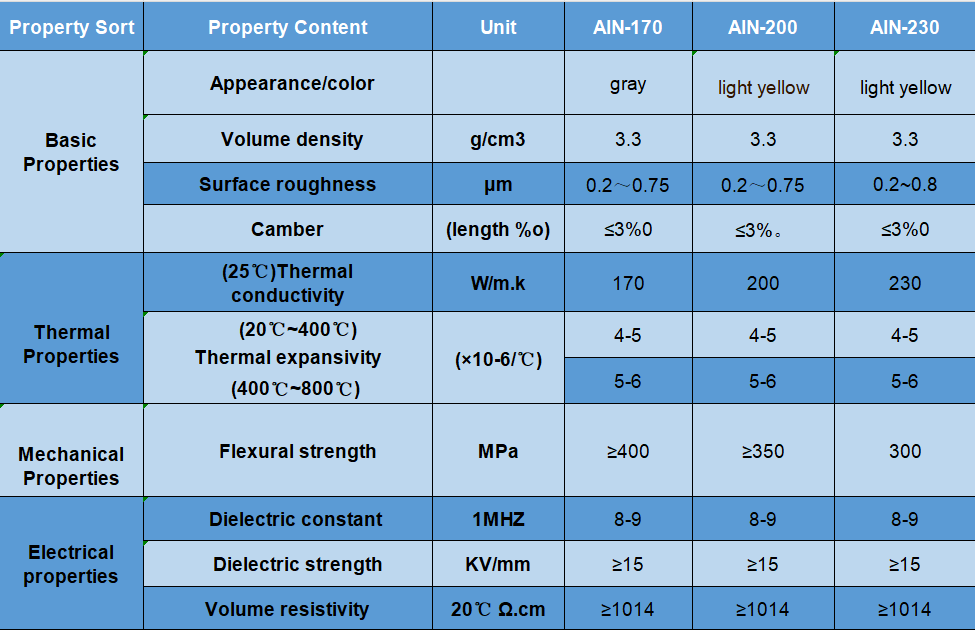
Latest Industry Technology Dynamics
The pursuit of ever-smoother surfaces is driving innovation in polishing technology. The industry is moving beyond traditional mechanical polishing to chemomechanical polishing (CMP) and colloidal silica-based polishing processes, which remove material at the atomic level without introducing subsurface damage. Furthermore, for non-planar or complex 3D ceramic components, advanced techniques like fluid jet polishing and magnetorheological finishing (MRF) are being adopted to achieve uniform mirror finishes on contoured surfaces, enabling new designs in sensor packaging and optoelectronics.
5 Critical Concerns for European & American Procurement Managers
When sourcing Mirror Grade Double Sided Polished AlN Ceramic Substrates, procurement managers must look beyond the basic Ra value and evaluate suppliers on these five key dimensions:
- Quantifiable Surface Metrology: Does the supplier provide certified data for not just Ra (average roughness), but also Rz (maximum height), and waviness? A true mirror finish requires control over both micro-roughness and macro-scale flatness.
- Freedom from Subsurface Damage: Does the polishing process introduce micro-cracks or stressed layers that could compromise the substrate's mechanical strength or thermal performance under thermal cycling? This is critical for long-term reliability in power devices.
- Dimensional Accuracy & Parallelism: Can the supplier maintain tight thickness tolerances (e.g., ±0.01mm) and exceptional parallelism across both polished surfaces on ultra-thin substrates (<0.25mm)? This is essential for automated pick-and-place assembly.
- Material Property Preservation: Does the intensive polishing process alter the near-surface properties of the ceramic, such as its thermal conductivity or dielectric constant? The finish must enhance, not degrade, the bulk material's performance.
- Cleanliness & Particulate Control: What are the final cleaning and packaging processes to ensure the substrate arrives free of polishing residues and particles that could ruin subsequent metallization or bonding steps in a cleanroom?
Puwei's Mirror-Grade Polishing: A Synthesis of Art and Science
Puwei's Mirror Grade Double Sided Polished AlN Ceramic Substrate is the result of a proprietary, multi-stage polishing regimen designed to deliver not just a visually perfect surface, but a functionally superior one. Our process is engineered to meet the exacting demands of the most sensitive integrated circuit and RF circuit applications.
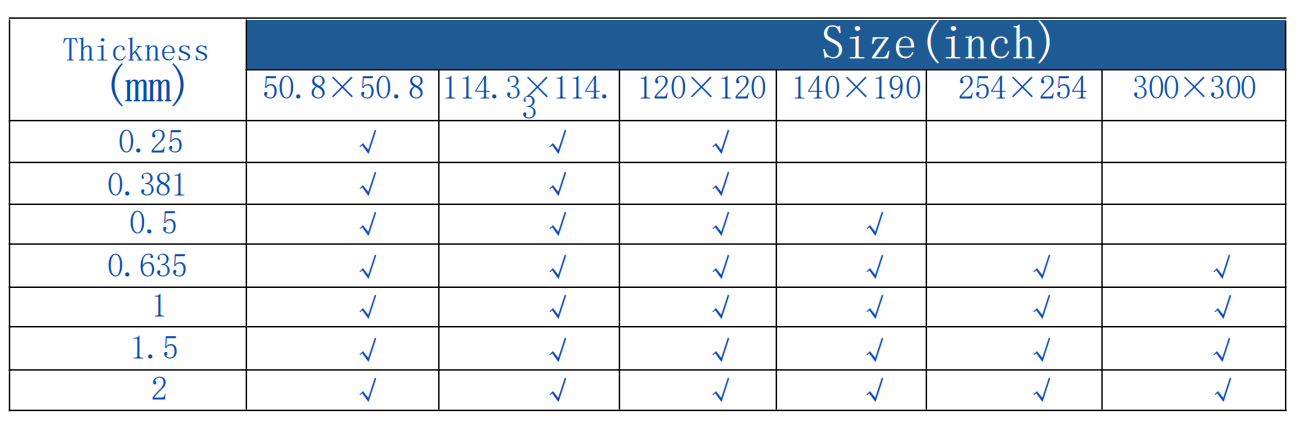
Core Technical Process and Advantages
- Proprietary Multi-Step Polishing Protocol: We employ a sequential process beginning with diamond grinding for planarization, followed by progressively finer abrasive slurries, and culminating with a final chemomechanical polish to achieve an Ra < 0.02 μm surface without embedded abrasive or subsurface damage.
- Dual-Side Simultaneous Processing: Our specialized equipment allows for controlled polishing of both sides simultaneously, ensuring perfect parallelism and minimizing bow and warp, which is critical for large size low warpage alumina ceramic substrates as well.
- Cleanroom-Based Final Processing: The final polishing and cleaning stages are conducted in a controlled cleanroom environment (ISO Class 1000 or better) to prevent contamination of the optical surface, making the substrates ready for high-end electronic packaging.
- Enhanced Thermal Interface Performance: The atomically smooth surface ensures maximal contact area when bonded to a heat sink or semiconductor die, drastically reducing thermal impedance—a key advantage over standard bare ceramic plates.
Industry Standards and Manufacturing Excellence at Puwei
Surface finish for critical components is specified according to international standards like ISO 1302 for surface texture indications and ASME B46.1 for surface roughness. For semiconductor applications, SEMI specifications provide further guidelines on flatness and cleanliness.
State-of-the-Art Polishing Facilities
Our capability is rooted in advanced, dedicated infrastructure. Puwei operates a dedicated precision polishing center equipped with computer-controlled, multi-head double-sided polishing machines and in-line metrology systems. This facility is complemented by our ultra-pure water and chemical supply systems for slurry management and final cleaning. This investment ensures we can deliver the consistent, high-quality mirror finish required for OEM/ODM projects in the semiconductor and aerospace sectors.
R&D Focus: Pushing the Boundaries of Surface Perfection
Our commitment to leadership in surface engineering is unwavering. Puwei's Surface Science R&D group, which includes tribologists and materials engineers, is focused on developing next-generation polishing technologies. Key initiatives include laser-assisted polishing for ultra-hard ceramics and environmentally friendly, nanoparticle-free polishing chemistries to achieve sub-nanometer surface finishes for quantum computing and advanced photonic applications.
Optimal Handling, Integration, and Maintenance Guidelines
A mirror-finished substrate demands meticulous handling to preserve its pristine surface until the moment of integration.
Step-by-Step Handling and Integration Protocol:
- Unpacking in Controlled Environment: Open packaging only in a clean, particle-controlled environment (e.g., laminar flow bench). Wear appropriate cleanroom attire and powder-free nitrile gloves.
- Visual & Metrological Inspection: Inspect under bright, oblique lighting to detect any scratches or particles. Use a non-contact optical profiler to verify surface roughness and flatness if required.
- Cleaning (Only if Necessary): If cleaning is required, use only high-purity solvents (e.g., ACS grade IPA) in an ultrasonic cleaner specifically qualified for delicate optics. Rinse with deionized water and dry with filtered nitrogen.
- Handling: Always handle by the edges. Use vacuum pick-up pens with soft, non-marring tips if direct handling is unavoidable. Never allow surfaces to contact each other or any hard object.
- Metallization & Bonding: The mirror surface is ideal for thin-film deposition and direct bonded copper (DBC). Ensure bonding fixtures are clean and designed to avoid scratching the polished face.
Key Operational & Maintenance Insights:
- Storage: Store in a dry, clean environment in the original, sealed protective packaging. For long-term storage, consider a nitrogen-purged cabinet.
- Cleaning Post-Processing: After processes like photolithography, use strippers and cleaners that are compatible with AlN to avoid etching or hazing the mirror surface.
- In-Service Monitoring: For components in exposed environments, periodic visual inspection can help identify contamination or degradation before it affects performance.
Frequently Asked Questions (FAQ)
Q1: What is the actual measured benefit of a mirror finish (Ra <0.02μm) vs. a standard polished finish (Ra ~0.1μm) for a power semiconductor substrate?
A: The benefit is substantial and multi-faceted. 1) Thermal Performance: It can reduce thermal interface resistance by up to 30-50%, directly lowering junction temperature. 2) Metallization Yield: It dramatically reduces defects in subsequent sputtering or plating, improving adhesion and electrical yield. 3) High-Frequency Loss: For RF circuits, it minimizes surface scattering, reducing insertion loss at mmWave frequencies.
Q2: Can you achieve a mirror finish on all types of ceramics, such as Zirconia or Silicon Carbide?
A: While the process is more challenging for harder or tougher ceramics, Puwei has developed specialized processes for a range of materials. Aluminum Nitride and high-purity Alumina are our most common mirror-finished products. For extremely hard materials like Silicon Carbide (SiC), we utilize diamond-based polishing processes to achieve near-mirror finishes, though the final Ra may be slightly higher. We recommend a consultation for non-standard materials.
Q3: Does the mirror polishing process affect the dimensional tolerances of the substrate?
A: Our process is designed to be a final, precision finishing step. We start with substrates that have already been ground to very tight dimensional tolerances (e.g., thickness ±0.01mm). The polishing step removes only a few microns of material uniformly, so it has a negligible effect on the overall dimensions but a transformative effect on surface quality. We maintain full traceability of dimensions pre- and post-polish.