

In an era where product differentiation and performance optimization are paramount, the ability to develop bespoke components is a critical competitive advantage. For B2B procurement managers and engineers in Europe and America, navigating the complexities of custom ceramic manufacturing can be daunting. This comprehensive guide demystifies the OEM/ODM partnership process with Puwei, outlining a clear, collaborative pathway to transform your innovative concepts into high-performance, reliable custom ceramic components for applications ranging from power electronics to advanced sensor packaging.
Why Partner with a Specialist OEM/ODM Ceramic Manufacturer?
Off-the-shelf ceramic parts often force design compromises. A true OEM/ODM partner like Puwei acts as an extension of your engineering team, providing the material science expertise, advanced manufacturing capabilities, and scalable production needed to create components that perfectly align with your functional, economic, and timeline requirements. This collaboration is essential for unlocking the full potential of advanced ceramics like Aluminum Nitride (AlN) and high-purity Alumina in next-generation products.
Latest Industry Dynamics in Custom Ceramic Manufacturing
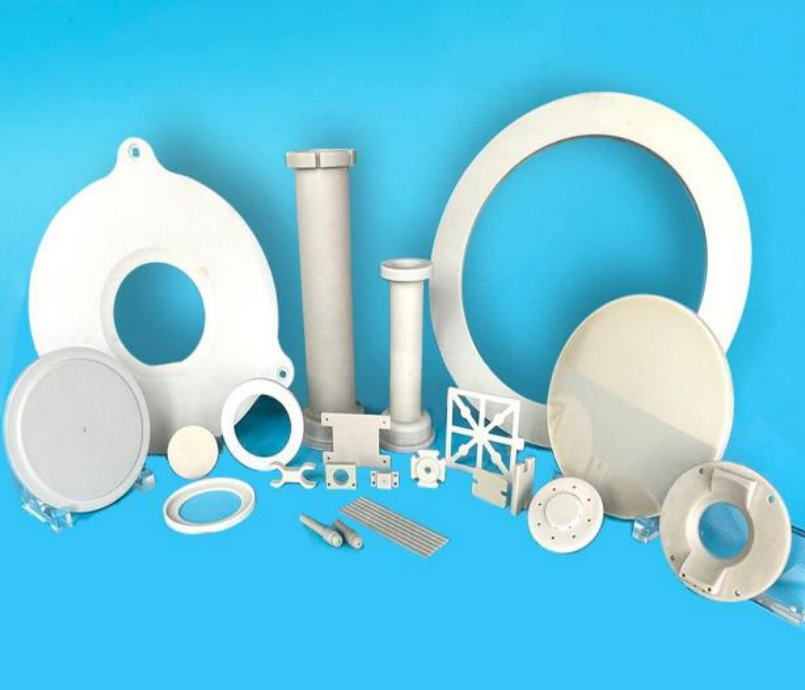
The trend is decisively moving towards functional integration and miniaturization. Customers no longer seek just a ceramic part; they seek a sub-system. This drives demand for components that combine structural, thermal, and electrical functions—such as a metallized ceramic substrate with integrated cooling channels or a complex, injection molded AlN housing that serves as both an insulator and a heat spreader. The ability to co-design the material, geometry, and manufacturing process is now a key differentiator.
5 Critical Focus Points for欧美采购商 in an OEM/ODM Partnership
Selecting the right manufacturing partner requires a strategic evaluation. Here are the five essential areas to assess:
- Technical Depth & Material Mastery: Does the partner have proven expertise not just in machining, but in the entire ceramic lifecycle—from powder formulation and sintering to laser precision machining and metallization techniques (Mo-Mn, DBC, DPC)? This ensures they can recommend the optimal material (e.g., choosing between 96% and 99.8% Alumina) for your application.
- Design for Manufacturability (DFM) & Concurrent Engineering: Will they provide proactive, iterative DFM feedback to optimize your design for cost, yield, and performance before tooling is made? A good partner prevents costly redesigns later.
- Prototyping Agility & NPI Process: What is their New Product Introduction (NPI) process? Look for a structured yet flexible approach that allows for rapid prototyping (using methods comparable to volume production) and clear stage-gates for design validation.
- Quality Systems & Supply Chain Transparency: Are their quality management systems (e.g., ISO 9001, IATF 16949) robust? Can they ensure traceability of raw materials (like high-purity aluminum nitride powder) and provide statistical process control (SPC) data for critical dimensions?
- Scalability & Program Management: Do they have the project management framework and production capacity (from custom ceramic machining lines to high-volume sintering furnaces) to seamlessly scale from prototypes to thousands or millions of parts without compromising quality or lead times?
Puwei's Collaborative OEM/ODM Framework: A Proven Pathway
Puwei has refined a collaborative, stage-gated process that ensures transparency, manages risk, and aligns our capabilities with your goals at every step.
Our 6-Step Development Process
- Discovery & Conceptual Design: We begin by deeply understanding your application's thermal, mechanical, electrical, and environmental requirements. Our engineers collaborate on initial concepts, often suggesting material choices (like AlN ceramic substrate for high thermal conductivity or a specific alumina ceramic substrate grade for cost-effective insulation).
- Feasibility Analysis & DFM: We conduct a technical and economic feasibility study. Our team provides detailed DFM analysis on your 2D/3D designs, suggesting modifications for manufacturability—such as adjusting wall thickness for ceramic injection molding or specifying tolerances for laser drilling processes.
- Prototyping & Iterative Testing: Using the most appropriate method (e.g., rapid CNC machining, prototype molding), we produce functional samples for your evaluation. We support iterative testing, providing insights based on the results to refine the design and material specification.
- Process Qualification & Pre-Production: Once the design is frozen, we engineer and qualify the full production process. This includes designing and fabricating permanent tooling (if needed), establishing the manufacturing process flow, and creating a detailed control plan. A pre-production run validates the process.
- Ramp-up to Volume Manufacturing: We execute the production launch plan, scaling up to meet your volume targets. Our project management ensures clear communication on schedule, quality metrics, and inventory.
- Sustaining Engineering & Lifecycle Support: Our partnership continues post-launch. We provide ongoing production support, monitor quality, and collaborate on potential design revisions or cost-down initiatives for the product's lifecycle.
Industry Standards & Our Commitment to Quality
Developing components for regulated markets demands adherence to stringent standards. Puwei's operations are built around international standards including ISO 9001 for quality management, material-specific standards (ASTM), and industry-specific protocols for electronic packaging and automotive (AEC-Q200) applications.
Manufacturing Scale and Technical Facilities
Our ability to deliver on OEM/ODM promises is rooted in substantial infrastructure. Puwei operates a 35,000 sqm integrated manufacturing campus. This includes dedicated facilities for tape casting and dry pressing of substrates, a high-temperature sintering center with atmosphere-controlled kilns, a precision machining hall with over 50 CNC and laser systems, and separate cleanrooms for metallization and assembly. This vertical integration gives us unparalleled control over quality, cost, and lead time.
R&D and Innovation: The Engine of Custom Solutions
Our commitment to innovation is a direct benefit to our OEM/ODM partners. Puwei's R&D center, staffed with over 50 materials scientists, chemists, and mechanical engineers, reinvests more than 8% of annual revenue into research. This enables us to tackle unique challenges, such as developing novel ceramic composites for extreme environments or pioneering direct bond techniques for new material combinations, ensuring your custom solution leverages the latest advancements.
Post-Development: Knowledge Transfer & Best Practices
A successful partnership includes ensuring your team can effectively integrate the custom component.
Typical Knowledge Transfer Includes:
- Component Specifications & Inspection Guide: Detailed documentation covering all critical-to-quality (CTQ) dimensions and properties.
- Handling & Storage Procedures: Guidelines to prevent damage to delicate features or mirror grade polished surfaces.
- Assembly Integration Notes: Recommendations for adhesives, solders, clamping forces, and thermal profiles compatible with the ceramic's properties.
- Failure Analysis Support: Access to our materials lab for joint analysis in the rare event of a field issue.
Frequently Asked Questions (FAQ)
Q1: What is the typical minimum order quantity (MOQ) for a custom OEM project with Puwei?
A: Our MOQ is flexible and depends on the complexity and manufacturing process. For complex injection molded or custom metallized parts requiring dedicated tooling, the MOQ may be in the thousands to justify the tooling investment. For parts made via custom ceramic machining from blanks, prototypes and lower volumes (even hundreds) are often feasible. We provide a detailed cost-breakdown analysis for different volume scenarios.
Q2: Who owns the intellectual property (IP) for a jointly developed custom component?
A: IP ownership is clearly defined in our project agreements. Typically, background IP (the technology each party brings to the project) remains with the original owner. Foreground IP (new designs, processes, or inventions arising specifically from the project) can be jointly owned or assigned based on mutual agreement. We prioritize transparent IP discussions at the project outset to ensure alignment and protect your innovations.
Q3: How does Puwei manage supply chain risks for raw materials, especially for high-purity ceramics?
A: We mitigate supply chain risk through multiple strategies: 1) Long-term agreements with certified raw material suppliers. 2) Maintaining a strategic inventory of key powders like high-purity AlN and Alumina. 3) Dual-sourcing for critical materials where possible. 4) Vertical integration in some precursor materials. Our goal is to ensure a stable, predictable supply for our OEM/ODM partners.