

Why Automotive Electronics Demand High-Performance Ceramic Substrates
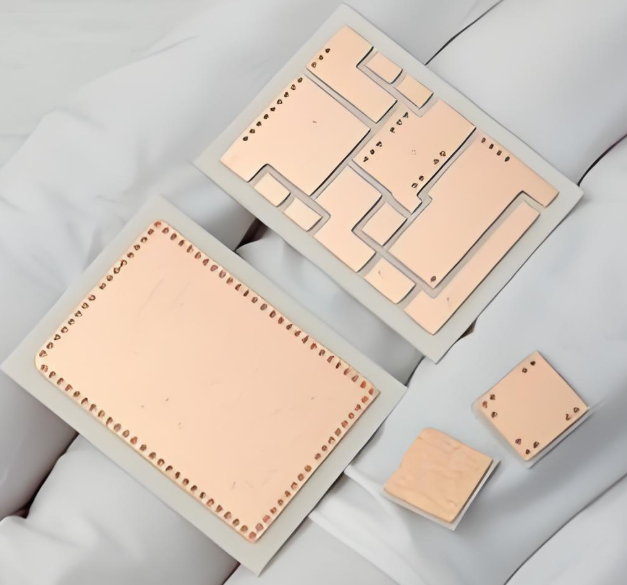
The rapid evolution of electric and autonomous vehicles is pushing electronic systems to their limits. At the heart of this revolution lies a critical component: the Automotive Grade Ceramic Substrate. Unlike conventional materials, specialized ceramics like Aluminum Nitride (AlN) provide the unmatched thermal, electrical, and mechanical stability required for next-generation automotive applications, from EV Traction Inverter Modules to Autonomous Driving Sensor Power Supplies.
Core Materials: Choosing Between AlN and Al₂O₃
Selecting the right ceramic base is the first critical decision for performance and cost-effectiveness.
Aluminum Nitride (AlN): The Performance Leader
With a thermal conductivity of 170-200 W/mK, AlN substrates are ideal for the most demanding thermal management challenges, such as Automotive SiC Power Packaging. Its closely matched CTE to silicon chips ensures long-term reliability under intense thermal cycling.
Alumina (Al₂O₃): The Cost-Effective Workhorse
Offering excellent electrical insulation and mechanical strength at a lower cost, Al₂O₃ is a reliable choice for applications like Battery Management System (BMS) Isolation and various sensor interfaces where extreme thermal conductivity is secondary.
Key Performance Advantages for Automotive Design
- Extreme Environment Stability: Operates reliably from -55°C to over 250°C, essential for under-hood components.
- Superior Heat Dissipation: AlN conducts heat over 100x better than standard FR-4 PCB materials, directly enabling higher power density.
- Vibration & Shock Resistance: Withstands the rigorous mechanical stresses of automotive life, crucial for Electric Power Steering (EPS) Drivers.
- High-Voltage Safety: Dielectric strength >15kV/mm ensures safe operation in 800V+ EV architectures.
Critical Applications in Modern Vehicles
From powertrain to infotainment, ceramic substrates are enabling technologies:
- Power Traction Inverters: The core platform for IGBT and SiC MOSFETs in the main drive.
- On-Board Chargers (OBC): Managing high-power AC-DC conversion efficiently.
- DC-DC Converters: Stepping voltage for 48V/12V systems with minimal loss.
- Thermal Management: Serving as a base for PTC heaters and controller modules.
- Advanced Driver-Assistance Systems (ADAS): Powering LIDAR and radar sensor modules reliably.
5-Step Guide to Specifying Your Ceramic Substrate
- Define Thermal & Power Requirements: Calculate heat flux and max junction temperature for your EV Inverter or OBC module.
- Select Base Ceramic Material: Choose AlN for peak thermal performance or Al₂O₃ for balanced cost.
- Choose Metallization Technology: Opt for AMB Ceramic for highest reliability or DBC for proven performance.
- Design for Manufacturability (DFM): Collaborate with your supplier early on pattern layout and component integration.
- Validate with Rigorous Testing: Ensure the substrate meets AEC-Q200 or equivalent automotive-grade reliability standards.
FAQ: Ceramic Substrates for Automotive Electronics
Q: Why can't traditional PCB materials meet new EV demands?
A: Materials like FR-4 have poor thermal conductivity (~0.3 W/mK) and lower temperature ratings. They cannot dissipate the intense heat from high-power SiC/IGBT chips or survive long-term under-hood temperatures, leading to premature failure.
Q: What's the difference between DBC and AMB substrates for an EV inverter?
A: Both bond copper to ceramic. DBC (Direct Bonded Copper) is a mature, cost-effective technology. AMB (Active Metal Brazing) uses an active braze alloy, creating a stronger interfacial bond that offers superior thermal cycling performance—often critical for lifetime warranty requirements in automotive applications.
Q: Are ceramic substrates cost-effective for automotive?
A: While the unit cost is higher than organic substrates, they enable system-level cost savings. By drastically improving thermal management, they allow for smaller, less expensive cooling systems, higher power density (reducing size/weight), and unparalleled reliability that lowers warranty costs—delivering a lower total cost of ownership.
At Puwei, we specialize in engineering and manufacturing high-reliability Ceramic Substrates tailored to the stringent demands of the automotive industry. Our expertise in AlN DBC Power Substrates and AMB ceramics helps manufacturers achieve the power density, safety, and longevity required for the future of mobility.
More production information: DBC Metallization of Alumina Substrate,Direct Bonded Copper of Alumina Substrate,Alumina Ceramic DBC Substrate