

Metallized Ceramic Parts: Types and Key Technologies for Advanced Electronics
In high-performance electronics, the foundation matters. Metallized ceramic substrates combine ceramic's thermal management with metal's conductivity, enabling breakthroughs in power, RF, and optoelectronics. This guide explores key technologies that procurement specialists need to evaluate.
Core Metallization Technologies: A Procurement Guide
Direct Bonded Copper (DBC)
The standard for power electronics. Copper foil bonds to AlN or Al₂O₃ ceramics at high temperature. Ideal for IGBT Modules and SiC Power Modules where thermal performance is critical.
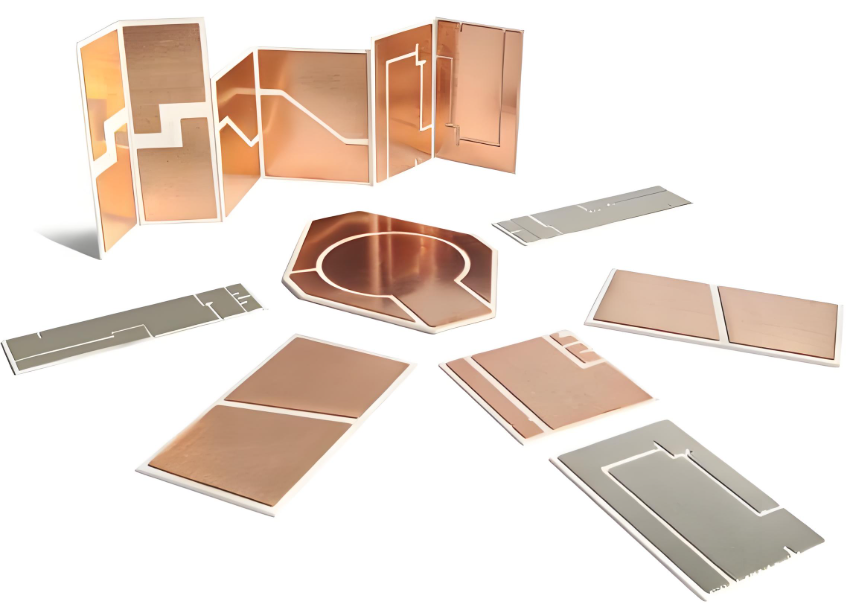
Active Metal Brazing (AMB)
Advanced bonding using active solder alloys (Ti, Zr) for superior strength. Exceeds DBC in thermal cycling reliability—perfect for automotive and harsh-environment power modules.
High Temperature Co-fired Ceramic (HTCC)
Tungsten/molybdenum metallization co-fired with alumina at 1500°C+. Creates monolithic, multi-layer structures for Aerospace Grade HICs and complex 3D packaging.
Thin Film Metallization
Sputtering/vapor deposition creates precision circuits for high-frequency applications. Essential for RF Power Amplifiers and Millimeter-wave IC Packaging where signal integrity matters.
Why Metallized Ceramics Deliver Superior Performance
- Thermal Management Excellence: Direct heat transfer from chips in Laser Diode Packaging and power modules
- Reliable Hermetic Sealing: Protection for MEMS Packaging and sensitive aerospace electronics
- CTE Matching: Aluminum Nitride's expansion matches silicon, preventing thermal stress
- Multi-function Integration: Combines electrical, thermal, and structural functions in one substrate
5-Step Evaluation Framework for Buyers
- Define Application Requirements
Power density? Frequency? Operating environment? (e.g., Automotive vs. Optical Communication Transceiver) - Select Ceramic-Metal Combination
Match CTE: AlN for high power, Al₂O₃ for cost-sensitive applications - Choose Metallization Technology
DBC for power, Thin Film for RF, HTCC for multilayer complexity - Specify Surface Finish
Ni/Au plating for solderability in TEC and HB-LED applications - Validate Supplier Capabilities
DFM support, quality certifications, and volume production experience
Procurement FAQs: Metallized Ceramic Substrates
Q: How do I choose between DBC and AMB for power modules?
A: AMB offers better thermal cycling performance (2-3x longer life) but at higher cost. Choose AMB for automotive/welding inverters; DBC for industrial drives where cost sensitivity is higher.
Q: What's the lead time for custom metallized patterns?
A: Standard designs: 4-6 weeks. Complex custom patterns with tight tolerances: 8-12 weeks. Always request DFM review to optimize timeline.
Q: How does surface roughness affect RF performance?
A: Critical for frequencies above 10GHz. Ra < 0.1μm minimizes skin effect losses. Specify surface finish requirements when procuring for RF PA applications.
At Puwei, we engineer precision Metallized Ceramic Parts using optimized DBC, AMB, and Thin Film technologies. Our solutions power next-generation electronics—from EV inverters to 5G infrastructure—with reliability validated in the most demanding applications.
More product information:Metalization Ceramics,AMB Ceramic Substrate,DBC Ceramic Substrate,DPC Ceramic Substrate