

DBC vs. DPC Ceramic Substrates: A Technical Comparison for Power Electronics Designers
Selecting the right ceramic substrate is a critical decision in power electronics and high-frequency circuit design. Two leading technologies dominate the market: DBC (Direct Bonded Copper) and DPC (Direct Plated Copper) substrates. Understanding their fundamental differences in manufacturing, performance, and application is essential for engineers and procurement specialists in power semiconductor, automotive, and RF industries. This guide provides a clear comparison to inform your material selection process.
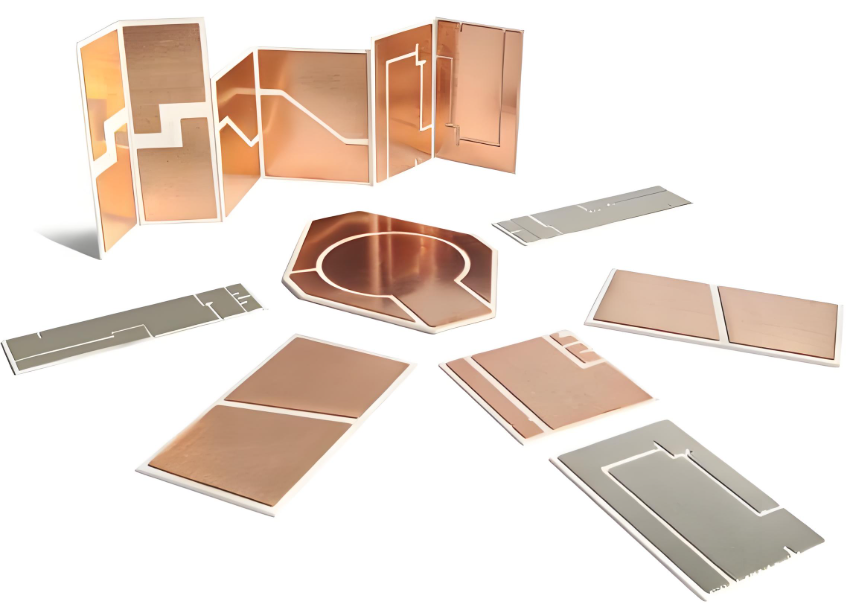
1. Core Manufacturing Process: A Tale of Two Techniques
The fundamental distinction lies in how the copper layer is bonded to the ceramic base, leading to vastly different structural and performance outcomes.
DBC (Direct Bonded Copper) Process
Principle: A high-temperature process (1065°C - 1083°C) where oxygen forms a Cu-O eutectic liquid, creating a chemical metallurgical bond between the copper foil and ceramic (Al₂O₃ or AlN).
Key Step: Precise control of the eutectic temperature and oxygen content. Pre-oxidation of copper foil is crucial for achieving the high-strength bond characteristic of a reliable DBC ceramic substrate.
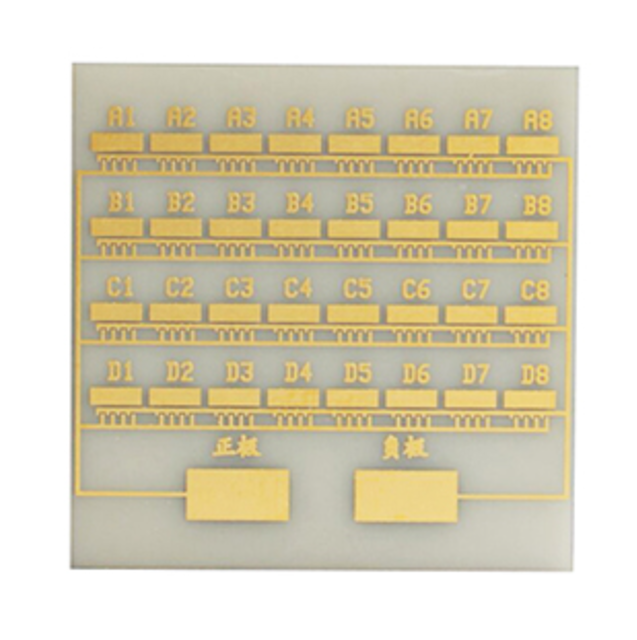
DPC (Direct Plated Copper) Process
Principle: A low-temperature process (<300°C) using semiconductor techniques. A seed layer is sputtered onto the ceramic, followed by photolithography to define the circuit pattern, and electroplating to build up copper thickness.
Key Step: Electroplating via filling technology. The quality of the sputtered adhesion layer (e.g., Ti, Cr) is critical for the bond strength in this DPC ceramic substrate.
2. Advantages & Disadvantages: Performance vs. Precision
DBC Substrate
Advantages:
- Superior Thermal Performance: Excellent thermal conductivity and heat spreading due to thick copper.
- High Reliability & Bond Strength: The chemical bond offers exceptional mechanical and thermal cycling resilience.
- Ideal for High Power/Current: Thick copper layers (typically 100-600μm) handle high currents, making them perfect for automotive electronic ceramic substrates and IGBT modules.
Disadvantages:
- Higher Cost: Requires advanced high-temperature equipment and precise process control.
- Limited Feature Resolution: Less suitable for very fine lines/spacing compared to DPC.
- Thermal Stress Risk: High-temperature bonding can induce stress, requiring careful design.
DPC Substrate
Advantages:
- Fine Line Capability: Enables high-density interconnects and complex circuits, ideal for microwave RF ceramic substrates and laser drivers.
- Low-Temperature Process: Avoids thermal stress on materials, suitable for temperature-sensitive components.
- Good Surface Flatness: Excellent for processes requiring high planarity.
Disadvantages:
- Lower Current Capacity: Electroplated copper is thinner, limiting current handling.
- Moderate Bond Strength: Adhesion between plated metal and ceramic is weaker than DBC's chemical bond.
- Environmental Concerns: Electroplating process generates waste that requires treatment.
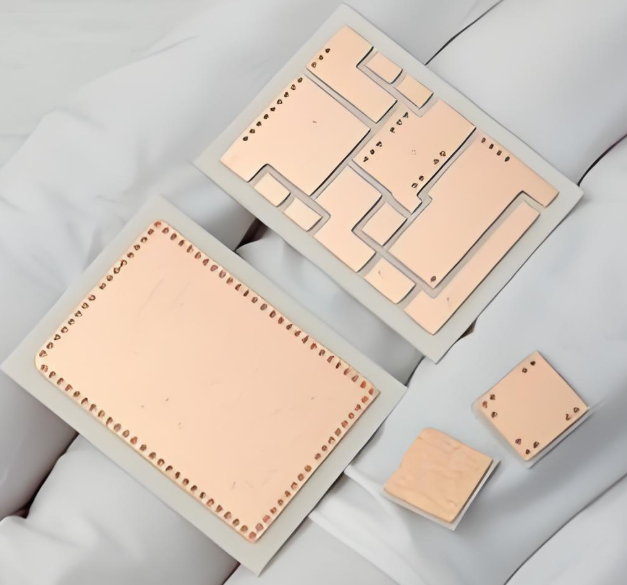
3. Application Characteristics: Choosing the Right Tool for the Job
DBC Substrate Applications
Dominates in high-power, high-reliability scenarios. Its thick copper and robust bond make it the standard for:
- IGBT & Power Modules: For EVs, industrial motor drives, renewable energy inverters.
- High-Power LED Packaging: Where effective heat extraction is paramount.
- Automotive & Aerospace Power Systems: Demanding environments requiring durability under thermal cycling.
For example, our Alumina Ceramic DBC Substrate is extensively used in next-generation traction inverters.
DPC Substrate Applications
Excels in high-precision, high-frequency applications requiring intricate circuitry:
- RF & Microwave Circuits: Filters, amplifiers, and antenna modules where fine lines are critical.
- Laser Diode (LD) & Photonic Packaging: Precise alignment and signal integrity are key.
- Thick/Thin Film Hybrid Circuits: As a base for Metallized Substrate For Thin Film Circuits, integrating resistors and capacitors.
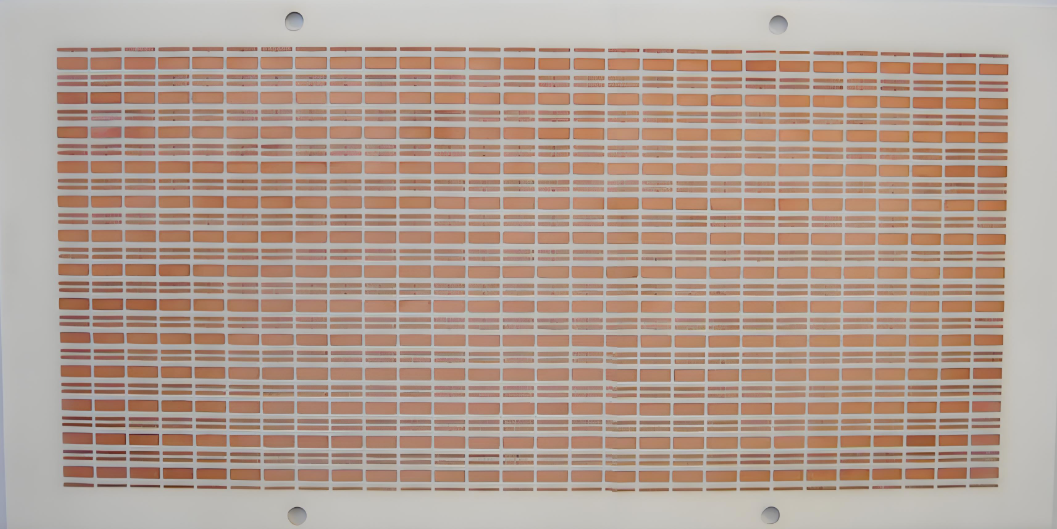
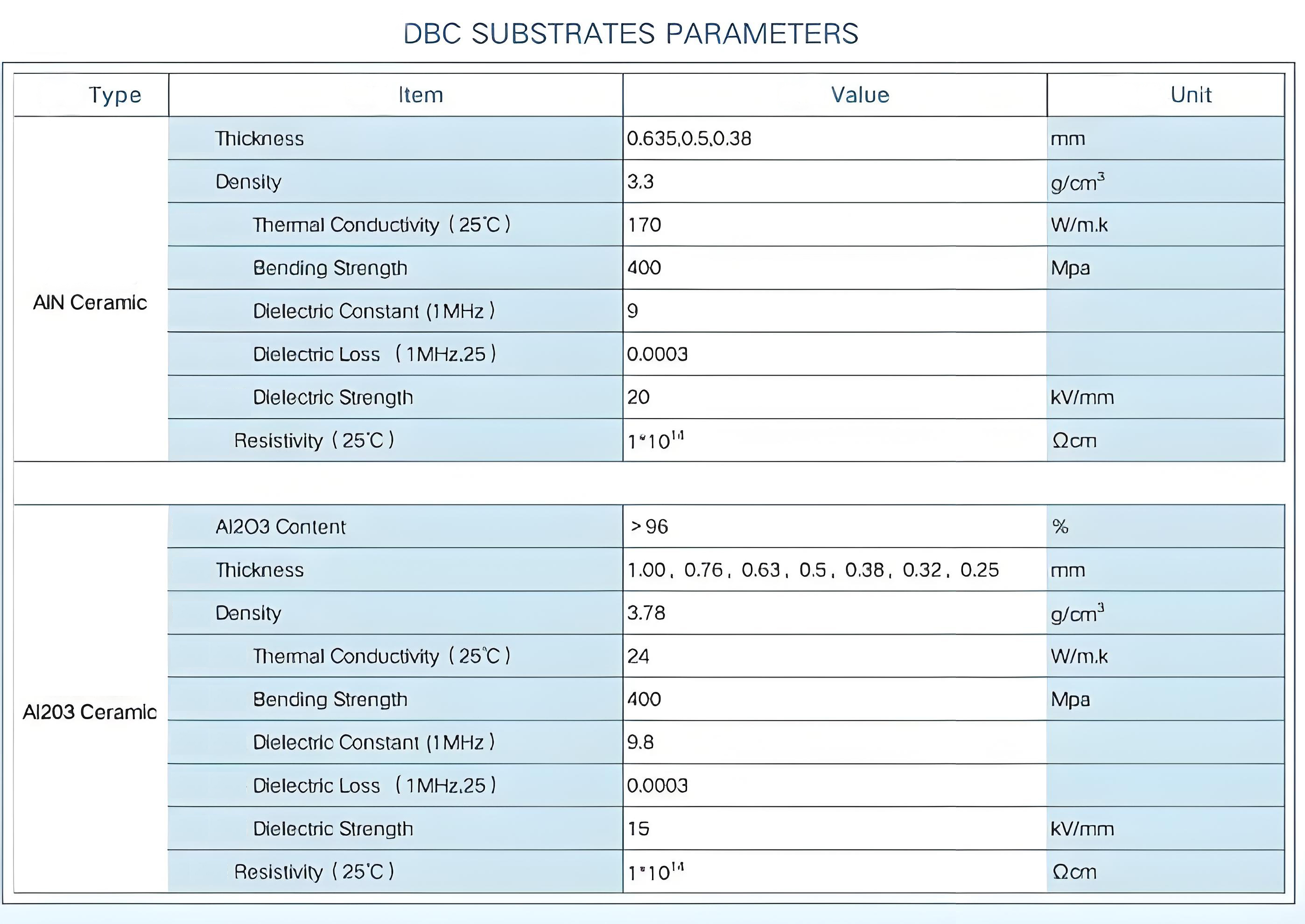
Quick Selection Guide for Engineers
Use this decision matrix as a starting point:
- Choose DBC if: Your priority is maximum thermal performance, high current, and ultimate reliability in harsh environments (e.g., power semiconductor ceramic substrates for EVs).
- Choose DPC if: Your priority is fine-pitch circuitry, high-frequency performance, or integration with thin-film elements (e.g., a Dpc Substrate For Ics in a sensor package).
Frequently Asked Questions (FAQ)
Can DPC handle high-power applications like IGBTs?
DPC is generally not the first choice for high-power IGBTs. Its thinner copper layer has lower current-carrying capacity and its adhesion strength is less robust under extreme thermal cycling compared to DBC. For high-power modules, DBC or AMB (Active Metal Brazing) are preferred.
Is DBC suitable for high-frequency RF designs?
While DBC can be used for RF, its thicker metallization and typically larger feature sizes can introduce parasitic inductance and capacitance at very high frequencies. DPC, with its fine-line capability, is usually superior for microwave and RF circuits above a few GHz.
Which process is more cost-effective?
There's no simple answer. DPC can have lower tooling costs for complex patterns but may be costlier per unit for thick copper. DBC has higher initial process setup costs but can be very cost-effective for high-volume, high-power applications where performance justifies the expense.
Conclusion
DBC and DPC are complementary technologies, each excelling in its own domain. DBC substrates are the workhorses of high-power, high-reliability electronics, while DPC substrates are the precision artists for high-density, high-frequency circuits. The optimal choice hinges on a clear analysis of thermal, electrical, mechanical, and cost requirements for your specific project. Partnering with an experienced manufacturer who masters both processes, like Puwei, ensures access to the right technology and expert guidance for your ceramic substrate needs.