

The exponential growth of global data traffic, driven by AI, 5G/6G, and hyperscale data centers, is pushing optical communication technology to its physical limits. At the heart of this evolution lies a critical, yet often overlooked, component: the packaging substrate. For B2B采购经理s sourcing transceivers, amplifiers, and switching modules, the material choice for this foundation directly impacts network performance, reliability, and total cost of ownership. This article explores why advanced Ceramic Optical Communication Device Products are becoming the industry benchmark and outlines the strategic considerations for procurement.
Why Ceramic Substrates are Dominating High-Performance Optical Packaging
While polymers and certain metals have their place, advanced ceramics offer a unique combination of properties essential for cutting-edge photonics. As data rates soar beyond 400G and move towards 1.6T, and as components are deployed in harsh environments from arctic servers to desert-based 5G towers, the stability of the packaging material is paramount.
Latest Industry Trends & Technology Dynamics
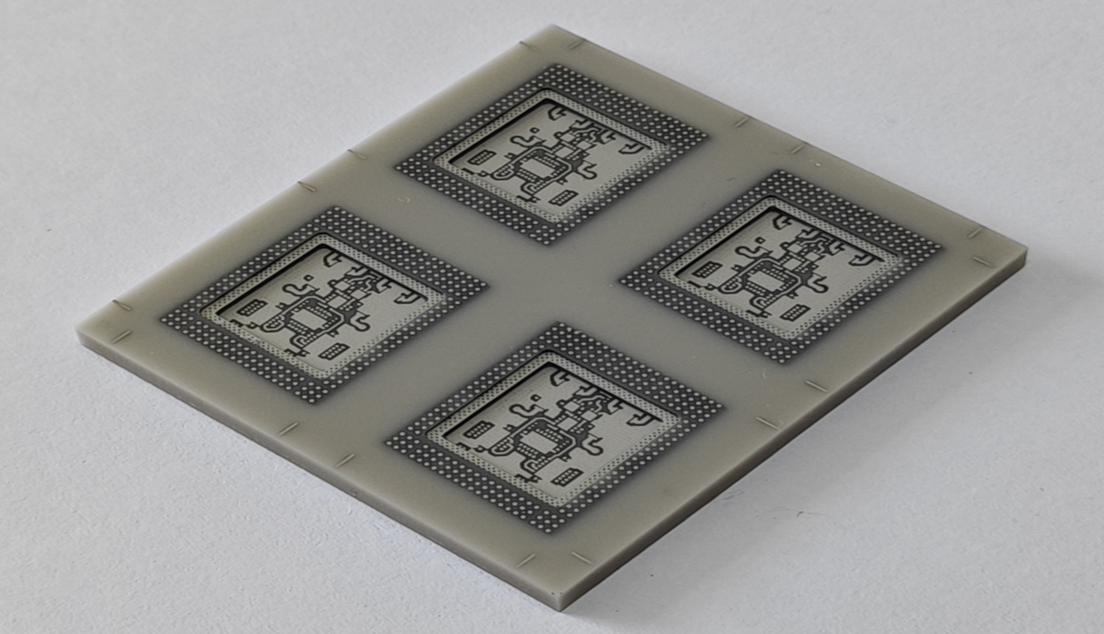
The trend is decisively moving towards higher integration and co-packaged optics (CPO). In CPO architectures, optical engines are placed extremely close to switch ASICs, drastically reducing power consumption and latency. This demands substrate materials with exceptional thermal management to handle concentrated heat loads—a core strength of materials like Aluminum Nitride Ceramics. Simultaneously, the rise of silicon photonics requires substrates with closely matched coefficients of thermal expansion (CTE) to silicon to prevent stress-induced performance drift, a challenge expertly addressed by specialized ceramic formulations.
5 Key Evaluation Criteria for欧美采购商s Sourcing Ceramic Optical Packages
When evaluating suppliers for Ceramic Optical Communication Device Products, procurement managers should prioritize these five areas:
- Signal Integrity & Ultra-Low Loss: Can the supplier guarantee insertion loss <0.5 dB and back reflection < -55 dB consistently? This is non-negotiable for maintaining signal quality in long-haul and high-speed links.
- Thermal & Dimensional Stability: Does the ceramic substrate maintain its shape and optical properties across the full operating temperature (-40°C to +500°C)? Warping or micro-cracking can misalign fibers and degrade signals.
- Precision Manufacturing & Yield: What is the demonstrated capability for dimensional tolerance of ±0.01mm and surface roughness <0.02 μm? High yield in precision manufacturing translates to stable supply and predictable costs.
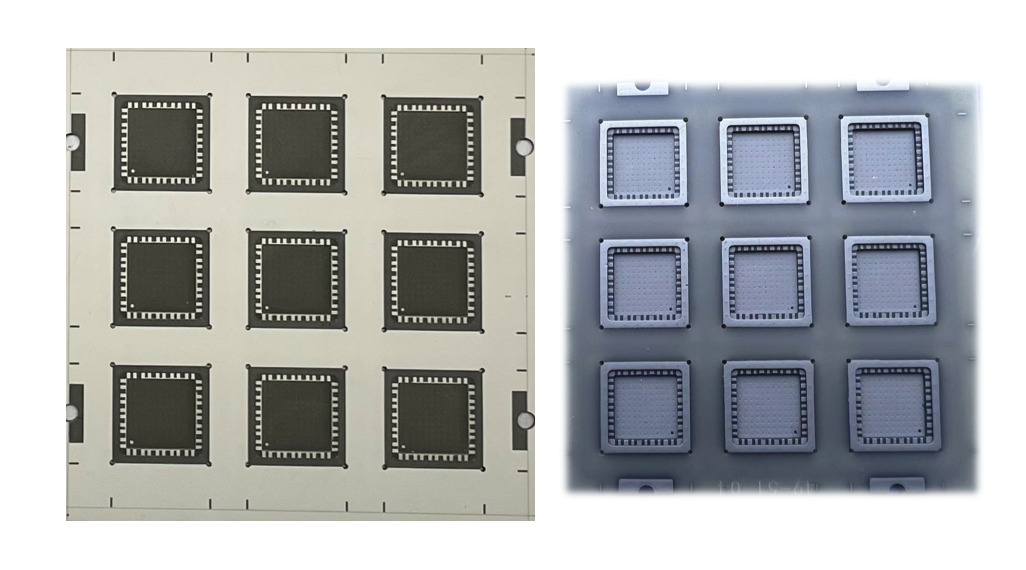
- Electro-Optical Integration Capability: Can the supplier provide Metallized Ceramics for seamless integration of driver electronics and photonic elements, similar to advanced Thick Film Hybrid Microcircuits? This enables compact, high-performance modules.
- Long-Term Reliability & Material Science Expertise: Does the supplier have deep expertise in material properties (e.g., customizable refractive indices from 1.8 to 2.4+) to tailor solutions for specific lasers or detectors, ensuring longevity under continuous operation?
Puwei's Ceramic Solutions: Engineered for Photonic Precision
Puwei leverages its decades of expertise in advanced technical ceramics to deliver a comprehensive portfolio of Ceramic Optical Communication Device Products. Our components are not merely replacements for polymers; they are engineered solutions designed to solve the core challenges in modern optical systems.
Product Portfolio & Technical Superiority
Our product line addresses critical points in the optical signal chain:
- Ceramic Waveguides & Substrates: Fabricated from materials like zirconia and SiC, they provide attenuation <0.1 dB/cm for efficient light guidance in integrated optical circuits, building upon our legacy in producing high-quality Alumina Ceramic Substrates.
- Ceramic Optical Connectors & Ferrules: Achieving ferrule concentricity <0.5μm, they ensure perfect fiber alignment for minimal connection loss, a precision derived from our work on High-Frequency Modules.
- Ceramic Optical Isolators: Utilizing YIG (Yttrium Iron Garnet) cores, they provide isolation >40 dB to protect sensitive lasers from back-reflected light, a critical component for amplifier stability.
Manufacturing Excellence and Puwei's Infrastructure
Consistent quality in optical ceramics is governed by stringent processes, not just specifications. Adherence to international standards for dimensional accuracy, surface quality, and material purity is the baseline.
Precision Manufacturing at Scale
Puwei's capability is rooted in significant infrastructure investment. Our 35,000 sqm manufacturing complex houses dedicated cleanrooms (to Class 1000 standards) for the final polishing and assembly of optical components. We employ advanced processes like laser machining and diamond grinding to achieve the micron-level tolerances and optical-grade surface finishes required for Microelectronics Packaging and photonic devices alike. This vertical integration, from powder formulation to final inspection, ensures total control over quality and supply chain resilience.
R&D Focus: Pioneering the Future of Integrated Photonics
Our commitment extends beyond current products. Puwei's R&D center, staffed with material scientists and optical engineers, is focused on next-generation solutions. Active projects include developing low-loss ceramic materials for terahertz applications and pioneering 3D-printed ceramic waveguide structures for unprecedented design freedom. This forward-looking approach ensures our partners are at the forefront of optical innovation.
Best Practices for Handling, Integration, and Maintenance
To preserve the exceptional performance of ceramic optical components, correct procedures are essential from receipt to installation.
Step-by-Step Integration Guide:
- Receipt and Inspection: Visually inspect all components in a clean environment for any shipping damage or particulate contamination.
- Cleaning Protocol: Clean optical surfaces only with high-purity, residue-free solvents like isopropyl alcohol and lint-free wipes. Never touch functional surfaces directly.
- Precision Handling: Always handle connectors by their body, never by the precision ceramic ferrule, to avoid compromising the dimensional tolerance.
- Careful Alignment and Mating: Ensure exact axial alignment before mating connectors. Use guide pins if available. Avoid any lateral force during connection.
- Secure Installation: When installing devices into modules or panels, follow specified torque values precisely to avoid stressing the ceramic body or internal alignments.
- Post-Installation Verification: Always perform key performance tests—insertion loss and return loss—after installation to validate the connection integrity.
Operational & Maintenance Knowledge:
- Environment: While ceramics are chemically inert, keep ports capped when not in use to prevent dust accumulation.
- Cycling: These components are designed for high durability. However, implementing a connection/disconnection cycle limit based on the application can be part of a predictive maintenance plan.
- Inspection: Periodically inspect deployed connectors for physical damage or contamination, especially in non-hermetic environments.
Frequently Asked Questions (FAQ)
Q1: For a new transceiver design, when should I definitely choose a ceramic substrate over a polymer one?
A: Choose ceramic when your application involves: 1) High power lasers (>1W) where thermal management is critical, 2) Operation in extended temperature ranges or harsh environments, 3) Requirements for ultra-high dimensional stability over time (low creep), or 4) Designs needing integrated Metallized Ceramics for electrical traces alongside optical paths, similar to requirements in Power Devices.
Q2: Can Puwei provide fully packaged optical sub-assemblies, or just the ceramic components?
A: We specialize as a core component and OEM/ODM solutions provider. We can deliver the critical ceramic platform—including substrates, ferrules, and isolator housings—with precise features ready for your fiber attachment and active component integration. We also offer design collaboration to optimize the ceramic part for your assembly process.
Q3: How does the lead time for custom ceramic optical components compare to standard parts?
A: Lead times vary by complexity. For a custom AlN Ceramic Substrate with specific metallization patterns for a photonic integrated circuit (PIC), expect 12-16 weeks. For standard ferrules or connector bodies, lead times are typically shorter (8-10 weeks), encompassing material preparation, precision forming, high-temperature sintering, and rigorous QA inspection.